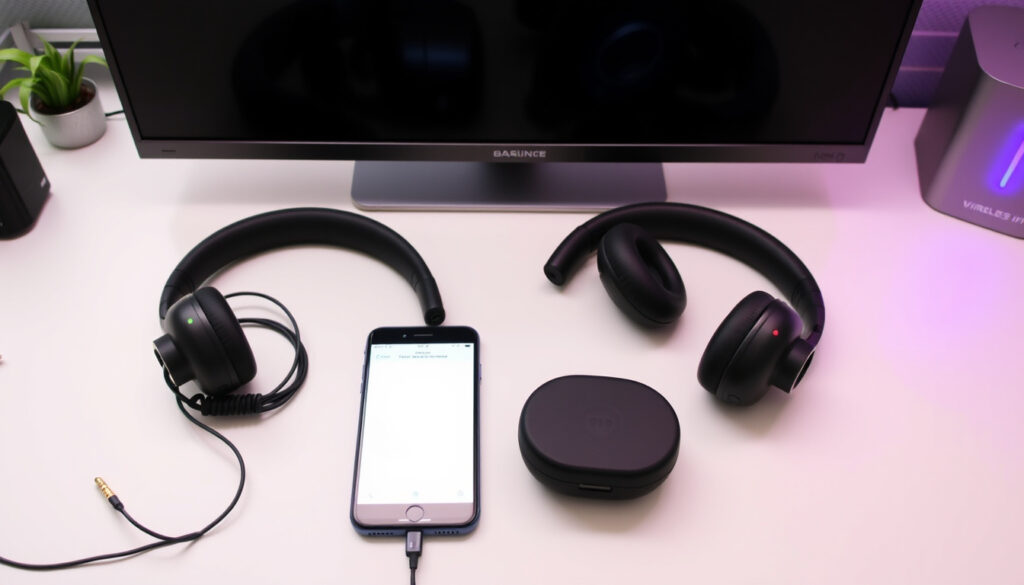
Shop On-Ear Headphones: Wired vs Wireless Buyer’s Guide
Wired headphones are making a quiet comeback, wrapped around wrists that ditched them years ago. This guide cuts through the noise to help you shop on-ear headphones with confidence, whether you’re chasing better audio fidelity, a break from battery anxiety, or just a more comfortable fit for smaller ears.
Common driver size for on-ear headphones: 30–40 mm ·
Typical weight range: 150–250 g ·
Battery life (wireless models): 20–40 hours ·
Price range for quality on-ear headphones: $100–$400
Quick snapshot
- Convenient for commuting and workouts. (CHOICE)
- Battery life ranges from 20 to 40 hours. (SoundGuys)
- Often include noise-canceling and voice assistant support. (Soundcore UK)
- Priced $200+, favored by audiophiles. (What Hi-Fi?)
- Includes high-fidelity drivers and premium materials. (What Hi-Fi?)
- Often adds active noise canceling (ANC). (Soundcore UK)
Three types of on-ear headphones dominate the shelf—wired (the purist’s pick), wireless (the commuter’s partner), and budget (the entry point)—and the pattern is clear: your choice in one category often dictates the other two.
| Feature | Wired On-Ear | Wireless On-Ear |
|---|---|---|
| Sound quality | Lossless, no compression (RTINGS) | Good, but codec-dependent (e.g., LDAC, aptX) (Soundcore UK) |
| Latency | Near-zero (RTINGS) | Noticeable lag in some models (RTINGS) |
| Battery | Not required (CHOICE) | 20–40 hours (SoundGuys) |
| Convenience | Cord management required (CHOICE) | Wire-free freedom (SoundGuys) |
| Price | $30–$200 (Best Buy) | $50–$400 (What Hi-Fi?) |
| Noise isolation | Passive; depends on seal (CHOICE) | Passive + optional ANC (Soundcore UK) |
The implication: the decision between wired and wireless sets the parameters for your entire headphone experience.
What are the best on-ear headphones?
On-ear headphones balance portability with sound quality, but the best pick depends on your use case. For most people, that decision starts with a trade-off between wired and wireless.
- Top wired picks: Models from brands like Sennheiser and AKG, praised for neutral tuning and build durability. (RTINGS)
- Top wireless picks: The Sony WH-CH520 and JBL Tune 520BT, which deliver solid battery and multipoint pairing under $100. (What Hi-Fi?)
- Best for commuting: Wireless models with active noise cancelling, such as the Soundcore Space One, offer isolation without bulk. (Soundcore UK)
- Best for small ears: On-ear headphones with adjustable headbands and plush cushioning, like the Audio-Technica ATH-S220BT, avoid pressure points. (Best Buy)
Top picks under $100
Budget buys now offer surprising performance. The JBL Tune 520BT (around $50) and Anker Soundcore Q20i (around $60) lead RTINGS’ affordable charts, providing 30+ hours of battery and bass-forward sound. (RTINGS)
Best for commuting
Voice calls and ANC are the deal-breakers here. The Sony CH720N and Sennheiser Accentum are both on What Hi-Fi?’s shortlist, but neither fully blocks train rumble. (What Hi-Fi?)
Premium models for audiophiles
For $200–$400, the Grado SR80x (wired, open-back) and the Bowers & Wilkins Px7 S3 (wireless, ANC) set the reference standard. Grado delivers an uncolored midrange; B&W adds aptX Adaptive and a 24-hour battery. (RTINGS)
On-ear headphones give you a middle ground: they cut the bulk of over-ears while avoiding the fit-issues of earbuds, but the pressure on your ear can become a pain point in long sessions.
What are the drawbacks of on-ear headphones?
On-ear headphones press directly on ears, which causes fatigue in some users after 60–90 minutes. (CHOICE) This is a common complaint on Reddit forums, where users recommend “hours of break” but admit the clamp force loosens over time.
- Comfort issues over long periods: The ear is subject to constant pressure; the 60/60 rule suggests limiting volume to 60% for 60 minutes to protect hearing. (SoundGuys)
- Sound isolation compared to over-ear: They leak sound and let in ambient noise, as they don’t fully seal the ear. (Soundcore UK)
- Durability of ear cushions: Cushion wear is a top warranty claim; budget models may use pleather that peels after 18 months. (CHOICE)
The implication: on-ear headphones are a compromise for the sake of portability. You trade isolation and ultimate comfort for a lighter bag and cooler ears.
Is it better to have wireless or wired headphones?
Wired headphones avoid battery charging requirements, which means you never run out of power mid-commute. (CHOICE) Wireless headphones, however, provide convenience and movement without cables. RTINGS says wired is better when low latency is critical (like recording audio), while wireless is better when freedom of movement matters. (RTINGS)
Latency and audio quality
For gaming or video editing, wired’s near-zero latency can’t be beat. What Hi-Fi? adds that on-ear buyers should consider whether Bluetooth is essential or if wired is preferable for performance. (What Hi-Fi?)
Convenience and portability
Wireless on-ear headphones support aptX or LDAC for better audio streaming, but they also introduce the risk of battery anxiety. (SoundGuys)
Battery vs. never needing charging
Wired headphones last forever with zero battery. CHOICE notes that customers often pick wired for unprotected listening during flights where you need to plug in. (CHOICE)
The pattern: wireless wins on convenience; wired wins on reliability and purity. Your call depends on whether you prioritize untethered freedom or uninterrupted playback.
How much should a good pair of headphones cost?
Your budget should follow your use case, not the other way around. Decent on-ear options start around $30, but that’s only the beginning—there’s a clear price-performance curve.
Three price bands cover most buyers:
Budget ($30–$80): Wired models like the Sony MDR-ZX110 offer basic sound and build; battery-free design means more money for drivers.
Mid-range ($80–$200): This sweet spot includes best-selling wireless models like the JBL Tune 520BT, with 40-hour battery and high-quality call mics. (What Hi-Fi?)
Premium ($200+): Expect premium materials, ANC, and better codecs (aptX, LDAC) that justify the jump in price. (RTINGS)
The 60/60 rule makes budget headphones dangerous only if you use them carelessly; loud volume and long sessions cost nothing extra.
What is the 60 rule for headphones?
The 60/60 rule is a hearing safety guideline endorsed by health organizations: listen at no more than 60% volume for a maximum of 60 minutes at a time. Exceeding these limits can lead to noise-induced hearing loss over time. (SoundGuys)
To apply it, set a timer and keep your device volume capped. Taking regular breaks gives your ears time to recover, reducing the risk of permanent damage. The 60/60 rule is especially relevant for on-ear headphones, which can drive sound directly into the ear canal without the natural attenuation of over-ear cups.
Is there a comeback trend for wired headphones?
Yes, wired on-ear headphones are seeing a resurgence, driven by Gen Z and audiophiles alike. Reddit forums and YouTube reviewers are pushing back against the “wireless or nothing” mentality, citing audio quality and environmental concerns.
- Why Gen Z is going wired: Aesthetics and a vintage vibe. Reports from RTINGS indicate that wired headphones are often seen as a simpler, more intentional choice.
- Audiophile revival: The wired market is growing in the professional and budget sectors. What Hi-Fi? has observed that classic models like the Grado SR60 are gaining new life as starter headphones.
This shift isn’t just a niche trend; it’s forcing brands like Sony and B&W to release dual-mode flagships—wireless headphones with a 3.5mm jack for use when battery dies.
“Wired headphones generally offer better quality than Bluetooth and a clear connection that is not prone to dropouts.”
— CHOICE, Australian government-funded consumer advocacy group
“Wireless ear cushions do not need to be swapped, but the battery will degrade over time and is not user-replaceable on many models.”
— RTINGS, independent audio review lab
whathifi.com, headphonesmatch.com, mychooz.com, electronics.alibaba.com, whathifi.com, thewearify.com
Frequently asked questions
Are on-ear headphones good for gaming?
Yes, particularly wired on-ear models, which offer low latency. RTINGS notes that on-ear headphones are often preferred for gaming due to their lightweight design and secure fit. (RTINGS)
Do on-ear headphones cancel noise?
Passive on-ear headphones reduce some ambient noise by covering the ears, but they do not actively cancel it. For active noise cancelling, you’ll need to look for models with ANC, which are more common in the wireless category. (Soundcore UK)
Can you sleep with on-ear headphones?
Yes, but not comfortably for long periods. On-ear headphones can press against the ear, causing discomfort during side sleeping. If you’re a back sleeper, they can be a decent choice, but in-ear earbuds are often preferred for sleep. (RTINGS)
How to clean on-ear headphones?
Cleaning your on-ear headphones is simple but essential. Use a soft, dry cloth to wipe the headband and ear cushions. For stubborn dirt, slightly dampen the cloth with water or a mild cleaning solution, but avoid getting moisture in the speaker mesh. Updating to removable ear pads, as found on the Grado SR60x, makes the job much easier. (SoundGuys)
Are on-ear headphones better than over-ear for small heads?
Yes, usually. On-ear headphones are lighter and have a smaller ear cup circumference, which can fit smaller heads more securely without slipping. Over-ear headphones often require a tight clamp to stay in place, which can cause pain. Best Buy’s guide suggests looking for on-ear models with an adjustable headband like the JBL Tune 520BT. (Best Buy)
What is the difference between on-ear and over-ear headphones?
The main difference is the ear pad size. On-ear headphones rest on the ear’s outer rim, while over-ear models completely encompass the ear. This simple design change leads to key differences in portability, noise isolation, comfort, and overall sound signature. Over-ears are generally better for home listening and bass response, while on-ears win for portability and airflow, reducing ear sweat. (RTINGS)
What is the 60 rule for headphones?
The 60/60 rule recommends listening at 60% volume for no more than 60 minutes at a time to protect your hearing. It is endorsed by hearing health organizations as a guideline to prevent noise-induced hearing loss. (SoundGuys)
More related posts
 The Girl Who Escaped: True Story, Where to Watch, Ending Explained
 Torn Meniscus Symptoms and Self-Tests
 Jobs Available Near Me in Ireland: Top Sites Guide
 Robot Vacuum and Mop: Pros, Cons, and Best Models for 2026
 Rebel Without a Cause: Controversy, Cast, and Queer Subtext
 How Much is Spotify Premium in Ireland? 2025-2026 Prices