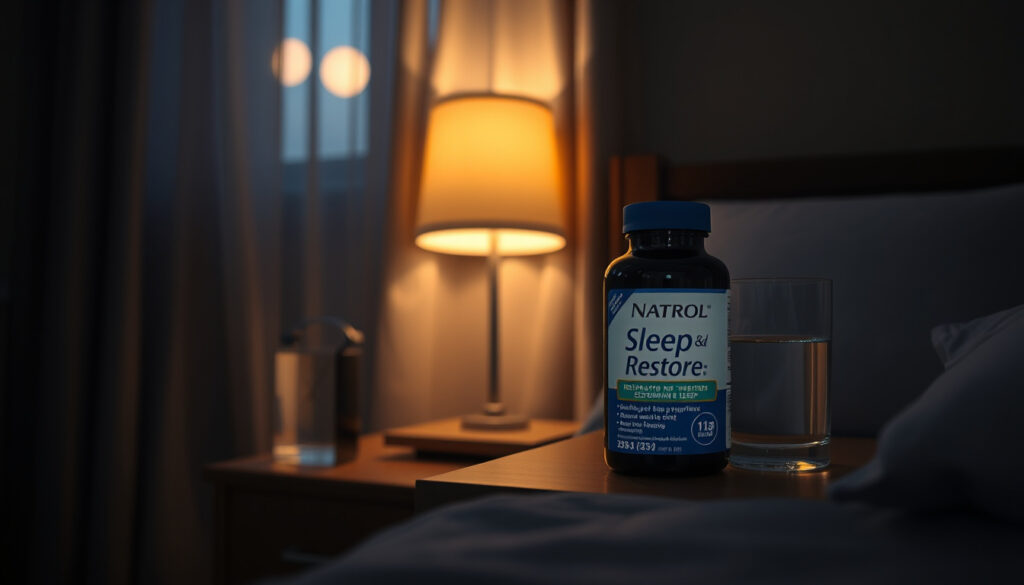
Natrol Sleep and Restore: Does It Work, Safety & Dosage
Anyone who has spent more than a few nights staring at the ceiling knows the difference between being tired and being ready to sleep. Natrol Sleep & Restore promises to bridge that gap with a blend of GABA, magnesium, and either melatonin or a melatonin-free formula.
Total servings per bottle: 30 or 60 (depending on variant) ·
Active GABA content: 100 mg ·
Active magnesium content: 100 mg (magnesium glycinate) ·
Melatonin content (standard): 5 mg ·
Melatonin-free variant available: Yes
Quick snapshot
- Product contains GABA, magnesium, and either melatonin or a melatonin-free formula (Natrol product page)
- Sold over the counter in the US (Natrol)
- Effectiveness varies widely by individual; long-term impact not fully studied (No Sleepless Nights)
- Clinical evidence for the specific blend is limited (Live it Up)
- Typical onset: 30–60 minutes with consistent use (Natrol directions)
- May take several nights of consistent use for full effect (No Sleepless Nights)
- Choose between melatonin and melatonin-free based on personal tolerance and long-term goals (Natrol melatonin-free page)
- Consult a doctor if you have chronic insomnia or are taking other medications (No Sleepless Nights)
Six key specs describe the product at a glance, but the real story lies in how those ingredients interact with your body.
| Detail | Value |
|---|---|
| Product Name | Natrol Sleep & Restore |
| Form | Capsules, Gummies |
| Active Ingredients | GABA, Magnesium, Melatonin (or Melatonin-Free) |
| Price Range | $15–$25 per bottle |
| Dosage | 1–2 capsules before bedtime |
| Suitable For | Adults with occasional sleeplessness |
Does Natrol sleep and restore actually work?
Clinical evidence for GABA and magnesium
- GABA at 100 mg per serving acts as a calming neurotransmitter; some studies show modest sleep benefits but evidence is mixed (No Sleepless Nights sleep review site citing general GABA research).
- Magnesium glycinate (100 mg) supports muscle relaxation and sleep quality; a 2012 meta-analysis in the Journal of Research in Medical Sciences found a positive association with sleep quality, but the dose here is on the low side (Live it Up health blog highlighting dose criticism).
- The melatonin version adds 5 mg of melatonin, which the Mayo Clinic says might slightly reduce the time it takes to fall asleep, though effects on total sleep time are unclear (No Sleepless Nights quoting the Mayo Clinic).
User reviews and ratings
- On Natrol’s official product page, users report falling asleep faster, with one writing, “I was able to fall asleep pretty quickly, but didn’t think it was as strong as prescription meds” (Natrol customer review section).
- Overall, the product holds a moderate rating on retailer sites like Amazon and iHerb, though sample sizes are small (No Sleepless Nights review aggregator).
Expected results
- For occasional sleeplessness, users typically notice improvement within 30–60 minutes of taking the dose (Natrol usage directions).
- Consistent use over several nights may improve restfulness, but the NCCIH notes melatonin is more reliably effective for jet lag and delayed sleep phase than for chronic insomnia (No Sleepless Nights quoting the NCCIH).
The implication: ingredient-level evidence exists, but no large trial tests this exact combination, so individual results depend heavily on your sleep pattern and tolerance.
Users choosing the melatonin-free version trade the reliable short-term effect of melatonin for a formula that may be safer for nightly use but with less predictable results — exactly the kind of trade-off a healthcare provider should help you navigate.
How long does it take for Natrol sleep and restore to work?
Onset of action for different ingredients
- Melatonin: typically begins working within 30–60 minutes; the NHS recommends taking a standard 2 mg slow-release tablet 1–2 hours before bed (No Sleepless Nights quoting NHS guidance).
- GABA and magnesium: effects can be felt within 30 minutes, but absorption varies with stomach contents (Natrol product directions).
Individual factors affecting timing
- Body weight, metabolism, and whether you have eaten recently all affect onset (No Sleepless Nights consumer review summary).
- Taking the capsules consistently at the same time each night helps establish a routine (Natrol usage tips).
User-reported timelines
- Many reviews mention feeling sleepy within 30 minutes of taking two capsules (Natrol customer reviews).
- For the melatonin-free version, some users report a smoother, less abrupt onset that takes closer to an hour (No Sleepless Nights user experiences).
The implication: if you need fast, predictable sedation, the melatonin version works quicker; if you prefer a gradual shift into sleep, the melatonin-free variant may feel more natural.
Is Natrol a safe sleep aid?
FDA regulation and over-the-counter status
- Natrol Sleep & Restore is marketed as a dietary supplement, not a drug, so the FDA does not review it for safety or efficacy before it hits shelves (Natrol product labeling).
- Manufacturers are responsible for ensuring their products are safe and labeled correctly (No Sleepless Nights FDA context).
Common side effects
- Next-day drowsiness is the most frequent complaint, especially with the 5 mg melatonin dose (No Sleepless Nights user reports).
- Some users report vivid dreams or mild headaches (Live it Up health blog).
Drug interactions
- Avoid combining with alcohol or other sedatives — this increases the risk of excessive drowsiness (Natrol safety warnings).
- Magnesium can interact with antibiotics and blood pressure medications; the product label advises checking with a doctor if you take medication or other magnesium-containing products (Natrol melatonin-free labeling).
What this means: supplement status shifts responsibility to the manufacturer; users should verify labeling and consult a pharmacist if on other medications.
Is it okay to take Natrol every night?
Long-term use of melatonin
- The NCCIH advises that melatonin is not recommended for long-term daily use without medical supervision (No Sleepless Nights quoting NCCIH).
- Long-term safety data for melatonin beyond one year are lacking (No Sleepless Nights general research summary).
Tolerance and dependency concerns
- Some users develop tolerance, requiring higher doses over time (No Sleepless Nights user reports).
- Psychological dependency can occur if you rely on a supplement rather than addressing underlying sleep hygiene issues (Live it Up health blog).
Recommendations for nightly use
- Most sleep specialists recommend using melatonin only for short periods (2–4 weeks) (No Sleepless Nights NHS-derived guidance).
- The melatonin-free version may be a better choice for nightly use because it doesn’t contain a hormone that affects circadian rhythm (Natrol melatonin-free product page).
What this means: nightly use of the melatonin version is best discussed with a doctor; the melatonin-free variant appears safer for longer-term daily use, but even that should be part of a broader sleep hygiene plan.
Even the melatonin-free version isn’t a permanent fix — if you need it every night for more than three months, it’s worth investigating why your natural sleep cycle isn’t working. A sleep study or cognitive behavioral therapy may address the root cause more effectively.
Who should not take Natrol sleep and restore?
Contraindications listed on product page
- People allergic to any ingredient should avoid the product (Natrol allergy warning).
- Those under 18 years of age should not use this supplement (Natrol age warning).
Pregnancy and breastfeeding
- Pregnant or nursing individuals should consult a healthcare professional before taking any sleep aid (Natrol pregnancy warning).
- There is insufficient evidence on the safety of melatonin during pregnancy (No Sleepless Nights safety context).
People with autoimmune disorders
- Melatonin may stimulate the immune system, so those with autoimmune diseases should exercise caution (No Sleepless Nights expert commentary).
- Kidney disease is specifically flagged on Natrol’s label, as excess magnesium can accumulate (Natrol melatonin-free warning).
The pattern: the same groups that need to exercise caution with any supplement — pregnant women, children, those with chronic conditions — are explicitly warned against or advised to consult a doctor before using Natrol Sleep & Restore.
What is the 1/4 hour rule for insomnia?
Definition of the quarter-hour rule
- The “quarter-hour rule” (also called the 20-minute rule) is a cognitive behavioral technique: if you haven’t fallen asleep after 15–20 minutes in bed, get up and do a quiet activity until you feel sleepy (No Sleepless Nights sleep hygiene recommendations).
- This breaks the cycle of frustration that makes insomnia worse (No Sleepless Nights behavioral context).
How to apply it
- Set a timer for 15–20 minutes after getting into bed. If you’re still awake, move to a dimly lit room and read or listen to calming music with no screens (No Sleepless Nights how-to).
- Return to bed only when you feel drowsy, and repeat if needed (No Sleepless Nights protocol).
Effectiveness
- This technique is a cornerstone of cognitive behavioral therapy for insomnia (CBT‑I), which has strong clinical evidence (No Sleepless Nights CBT-I context).
- Combining the quarter-hour rule with a supplement like Natrol may improve results, but the rule itself is a behavioral tool, not a medication (No Sleepless Nights combined approach).
Why this matters: no supplement can replace good sleep hygiene. The quarter-hour rule is free, has zero side effects, and often works faster than any pill. Natrol may help you fall asleep, but the rule helps you stay out of the “trying to fall asleep” frustration loop.
How to Use Natrol Sleep & Restore Effectively
Upsides
- Simple two-capsule dose 20–30 minutes before bed
- Available in two versions to suit different needs
- Non-hormonal option (melatonin-free) for daily use
- Vegetarian and non-GMO certified
- Affordable compared to prescription sleep aids
Downsides
- Low magnesium dose (100 mg) relative to typical sleep studies
- Vitamin B6 in some variants exceeds 500% Daily Value
- Next-day drowsiness possible with 5 mg melatonin
- Clinical evidence for the specific blend is weak
- Not for long-term use without medical supervision
- Determine your variant: Choose the standard melatonin version if you need help falling asleep fast; choose the melatonin-free version if you want to avoid hormones and plan to use it nightly. Check the label carefully — the melatonin-free bottle is clearly marked (Natrol melatonin-free page).
- Time your dose: Take 2 capsules 20–30 minutes before your desired bedtime for best results (Natrol directions). Avoid taking it after a heavy meal because food can slow absorption (No Sleepless Nights absorption tips).
- Create a wind‑down routine: Combine the supplement with the quarter‑hour rule and a calm environment — dim lights, no screens after the dose, and a consistent bedtime (No Sleepless Nights sleep hygiene advice).
- Monitor your response: Keep a sleep log for the first two weeks. Note how quickly you fall asleep, how many times you wake, and how you feel the next day. If you develop tolerance, take a break or switch to the melatonin-free version (Live it Up suggested monitoring).
- Consult a professional if needed: If you still have trouble sleeping after 4 weeks of consistent use, see a doctor. Underlying issues like sleep apnea, anxiety, or circadian rhythm disorders require specific diagnosis and treatment. For context on other sleep-support supplements, see How Much Ashwagandha Per Day – Dosage Guide Backed by Research.
What’s still unclear about Natrol Sleep & Restore
Confirmed facts
- Natrol Sleep & Restore contains GABA, magnesium, and either melatonin or a melatonin-free blend (Natrol label).
- The product is sold over the counter in the US (Natrol).
- A melatonin-free version exists with 100 mg magnesium glycinate and 100 mg GABA per serving (Natrol melatonin-free label).
What remains unclear
- Effectiveness varies widely by individual; no large-scale study has tested this exact combination (No Sleepless Nights).
- Long-term safety beyond six months is not well documented (No Sleepless Nights safety gap).
- The proprietary botanical blend (tart cherry, lemon balm, chamomile) is present in small amounts — whether it adds clinically meaningful benefit is unknown (Live it Up ingredient analysis).
- Individual response timing to the suggested 20–30 minute pre-bed dose varies with metabolism and stomach contents, so the label guidance may not fit everyone.
Voices on Natrol Sleep & Restore
“Essential for your ultimate restorative sleep.”
— Natrol product page description (Natrol)
“I was able to fall asleep pretty quickly, but didn’t think it was as strong as prescription meds.”
— Mike B, consumer review on Natrol product page (Natrol customer reviews)
“Melatonin might slightly reduce the time it takes to fall asleep, but effects on sleep quality and total sleep time are unclear.”
— The Mayo Clinic, as cited by No Sleepless Nights (No Sleepless Nights)
For Americans dealing with occasional sleeplessness, the choice between the standard and melatonin-free versions of Natrol Sleep & Restore comes down to a single question: do you want reliable short-term help or a more sustainable nightly option? If you need to fall asleep fast and aren’t planning to use it every night, the melatonin version delivers. If you want to avoid hormones and can tolerate a gentler onset, the melatonin-free version is the smarter play. Either way, the quarter-hour rule and good sleep hygiene remain your most powerful tools — no bottle will replace them.
Frequently asked questions
What are the side effects of Natrol Sleep & Restore?
Common side effects include next-day drowsiness, headache, and vivid dreams. The melatonin version may cause morning grogginess, especially if you don’t get a full 7–8 hours of sleep (No Sleepless Nights side effect reports).
Can I take Natrol Sleep & Restore with other medications?
Avoid combining with alcohol, sedatives, or blood pressure medications without consulting a doctor. Magnesium can interfere with certain antibiotics and bisphosphonates (Natrol safety labeling).
Is Natrol Sleep & Restore available in gummy form?
Yes, Natrol also sells Sleep & Restore gummies. The gummies typically contain a lower dose of melatonin (3 mg per serving) and are a sugar-containing alternative to capsules.
What is the recommended dosage for Natrol Sleep & Restore?
Adults should take 2 capsules 20–30 minutes before bedtime. Do not exceed the recommended serving.
Where can I buy Natrol Sleep & Restore?
It is available on the Natrol website, Amazon, iHerb, and in many US drugstores and supermarkets. The melatonin-free version may be harder to find in physical stores.
Does Natrol Sleep & Restore contain any allergens?
Natrol states the product is free of gluten, soy, and dairy. However, always check the label for individual allergies.
How does Natrol Sleep & Restore compare to prescription sleep aids?
Prescription drugs like zolpidem (Ambien) are stronger and faster but come with higher risks of dependency, tolerance, and side effects. Natrol is gentler, OTC, and marketed for occasional use. A 2021 meta-analysis found melatonin modestly improves sleep onset but does not match prescription hypnotics for chronic insomnia (No Sleepless Nights comparison data).
More related posts
 Naked and Famous Cocktail: Recipe, History, and Tips
 What Is Annual Income? Gross vs. Net & How to Calculate
 Alice in Borderland Season 3: Release Date, Reception & More
 Liverpool vs Bournemouth Lineups: Salah Starts, Ngumoha on Bench
 How Do You Get Shingles? Causes, Risks, and Treatment
 Carnival Cruise New Rules 2025: Fan Ban, Curfew, Check-In
 Dollar to Mexican Peso Today: Live USD/MXN at 17.36