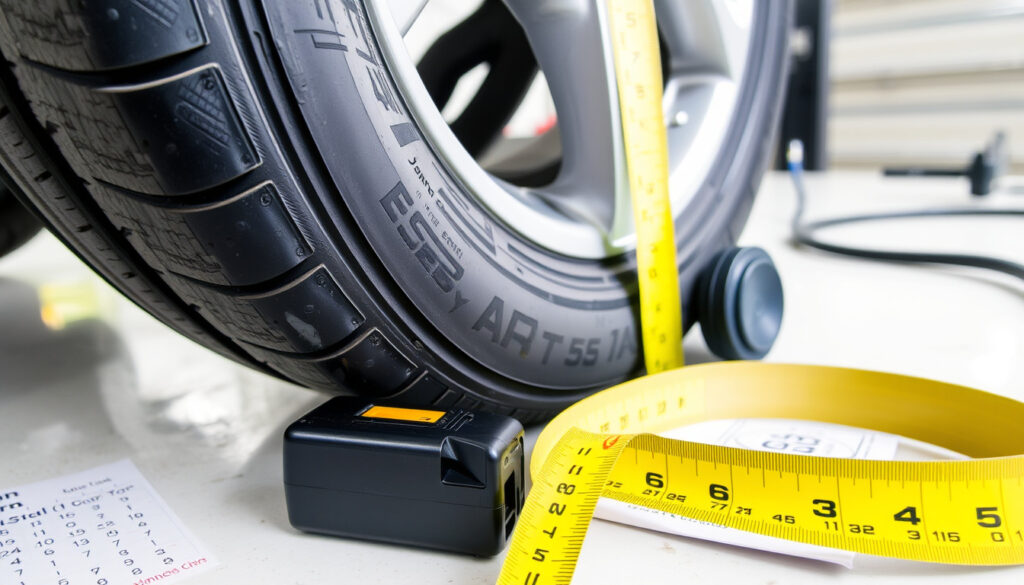
How to Read Tire Size: Numbers, Meanings, and Conversions
That jumble of letters and numbers on your tire’s sidewall can feel like a secret code — but once you learn the pattern, it’s surprisingly straightforward. Take 225/65R17: the “225” is the width in millimeters, “65” is the aspect ratio, and “17” is the rim diameter in inches.
Width: 225 mm ·
Aspect ratio: 65% ·
Rim diameter: 17 in ·
Overall diameter: ~28.5 in
Quick snapshot
- First number = tire width in mm (Les Schwab Tire Centers, tire retailer)
- Second number = aspect ratio as % of width (Les Schwab Tire Centers)
- R = radial construction (Les Schwab Tire Centers)
- Exact overall diameter varies by brand and tread depth (General Tire, tire manufacturer)
- Load index values need a reference chart to convert to weight capacity (General Tire)
- ETRTO adopted a 0.70 coefficient for 70-series tires, later extended to lower series (ETRTO, European Tyre and Rim Technical Organisation)
- Always verify overall diameter when swapping metric for inch-sized tires (MotorTrend, automotive publication)
Here is a quick reference of the key markings on a tire sidewall.
| Label | Value |
|---|---|
| Tire size location | Sidewall |
| Width unit | Millimeters |
| Aspect ratio | Percentage |
| Rim diameter | Inches |
| Load index | Number code |
| Speed rating | Letter code |
What does 225/65 R17 mean on a tire?
Width (225 mm)
- The first number, 225, is the section width in millimeters — the widest point of the tire from sidewall to sidewall, measured when mounted on the recommended rim (General Tire, tire manufacturer).
Aspect ratio (65%)
- The second number, 65, means the sidewall height is 65% of the tire’s width. For a 225 mm tire, that’s 146.25 mm of sidewall (General Tire).
Radial construction (R)
- The letter R indicates radial construction — the most common type for passenger vehicles today (TireSize.com, tire size reference).
Rim diameter (17 in)
- The final number, 17, tells you the wheel rim diameter that the tire fits, measured in inches (General Tire).
Load index and speed rating
- After the rim diameter you may see a two‑digit load index and a letter speed rating (e.g., 102H). Load index indicates maximum load capacity; speed rating shows the top safe speed (General Tire).
The implication: Each part of the 225/65R17 string plays a specific role. Change any one number, and the tire’s fit and performance shift — especially the aspect ratio, which directly affects ride height and handling.
What do the 3 numbers mean on tire size?
First number: Tire width
- The first three‑digit number is the tire width in millimeters. For a P225/65R17, the width is 225 mm (MotorTrend, automotive publication).
Second number: Aspect ratio
- The two‑digit number after the slash is the aspect ratio — expressed as a percentage of the width (MotorTrend). A 65 aspect ratio means the sidewall is 65% as tall as the tire is wide.
Third number: Rim diameter
- The last number is the rim diameter in inches. In 225/65R17, the rim is 17 inches across (TireFitLab, tire education site).
Additional markings (P, LT, load index, speed rating)
- Prefix letters like P (passenger) or LT (light truck) modify the intended use. Load index and speed rating follow the rim diameter (TireFitLab).
The pattern: The three numbers together define the tire’s basic dimensions and intended fit.
Is a 265 the same as a 31?
Understanding metric size 265
- 265 refers to the tire width in millimeters, not the diameter. A 265/75R16 has an approximate overall diameter of 31.6 inches (TireSize.com).
Understanding inch size 31
- 31″ means the overall tire diameter is about 31 inches — that includes the sidewall twice plus the rim diameter (MotorTrend).
Calculating overall diameter
- Overall diameter = (2 × sidewall height) + rim diameter. Sidewall height = (width in inches) × (aspect ratio). For a 265/75R16: width = 265 ÷ 25.4 ≈ 10.43 in; sidewall = 10.43 × 0.75 = 7.82 in; diameter = (2 × 7.82) + 16 = 31.64 in (Tire Calculator Hub, online conversion tool).
Common metric sizes for 31-inch tires
- Common metric equivalents for a 31″ diameter include 265/70R17 (≈31.0 in), 285/75R16 (≈32.8 in), and 275/70R17 (TireSize.com).
The trade-off: A 265 metric tire is not automatically a 31‑inch tire. Without checking the aspect ratio and rim diameter, you might end up with a diameter that’s off by over an inch — enough to affect speedometer accuracy and clearance.
What size is a 31 inch tire?
Definition of 31-inch tire
- A 31″ tire has an overall diameter of approximately 31 inches, measured from the ground to the top of the tread (MotorTrend).
Metric equivalents (265/70R17, 285/75R16)
- Common metric equivalents: 265/70R17 yields about 31.0 in; 285/75R16 yields about 32.8 in. The exact equivalent depends on the sidewall height (TireSize.com).
Variations by manufacturer
- Actual diameter can vary ±0.3 inches across brands due to tread design and casing construction (General Tire).
How to measure tire diameter
- To verify, measure the tire standing upright: place a tape measure from the ground to the top center of the tread. For accuracy, check at multiple points around the circumference (Les Schwab Tire Centers).
Why this matters: A 31‑inch tire is a popular upgrade for off‑road trucks, but the same metric size can give a diameter anywhere from 30.5 to 32.5 inches. Always measure or check the manufacturer’s specs before buying.
How do you read tire size in metric?
Locating tire size on sidewall
- Tire size is embossed on the sidewall, usually in large characters. Look for a string like P225/65R17 near the outer edge (General Tire).
Reading the sequence
- Read from left to right: width in mm, slash, aspect ratio as %, construction letter, rim diameter in inches (MotorTrend).
Understanding P-metric vs LT
- P stands for passenger vehicle, LT for light truck. LT tires have higher load capacity and often a reinforced sidewall (TireFitLab).
Interpreting load index and speed rating
- After the size you’ll see a two‑digit load index (e.g., 102 = 1,874 lbs per tire) and a letter speed rating (e.g., H = 130 mph). These must match your vehicle’s requirements (TireFitLab).
Using tire size charts
- Conversion charts list metric sizes alongside their inch‑equivalent diameter and width. A 225/65R17 has an approximate overall diameter of 28.5 in (TireSize.com).
The pattern: Metric sizing is a four‑part code. Once you know the sequence — width, aspect ratio, construction, rim — you can calculate the tire’s dimensions yourself. The rest is matching load and speed to your car.
Many drivers assume a 265 tire is the same as a 31-inch tire, but the width number alone tells you nothing about overall diameter. You need the aspect ratio and rim size to know if it will fit your wheel well.
Metric vs Inch Tire Size Comparison
Five common metric sizes and their approximate inch equivalents — one pattern: the same metric width can yield very different diameters when the aspect ratio changes.
| Metric size | Width (in) | Sidewall (in) | Overall diameter (in) |
|---|---|---|---|
| 225/65R17 | 8.86 | 5.76 | 28.5 |
| 265/70R17 | 10.43 | 7.30 | 31.0 |
| 285/75R16 | 11.22 | 8.42 | 32.8 |
| 305/70R17 | 12.01 | 8.41 | 33.3 |
| 33×12.50R17 | 12.50 | 8.50 | 33.0 |
The implication: A 265/70R17 gives roughly the same diameter as a 31‑inch tire, while a 285/75R16 is closer to 33 inches. Matching the diameter is critical for speedometer accuracy and suspension clearance.
Tire Size Spec Table
Key specifications for a typical metric tire (225/65R17) and how each parameter is measured or derived.
| Parameter | Value | Unit / Notes |
|---|---|---|
| Section width | 225 | mm |
| Aspect ratio | 65 | % |
| Construction | Radial (R) | – |
| Rim diameter | 17 | inches |
| Sidewall height (calculated) | 146.25 | mm (225 × 0.65) |
| Sidewall height (inches) | 5.76 | 146.25 ÷ 25.4 |
| Overall diameter (calculated) | 28.5 | inches (2 × 5.76 + 17) |
| Overall diameter (approx) | 28.5 | inches |
| Revs per mile (approx) | 712 | based on ~28.5 in diameter |
| Common load index | 102 | 1,874 lbs |
| Common speed rating | H | 130 mph |
Step-by-Step: How to Read Tire Size
- Step 1: Find the size on the sidewall. Look for a string of characters on the tire’s sidewall. It’s usually on the outer side, near the bead (General Tire, tire manufacturer).
- Step 2: Identify the first number (width). Note the first three digits (e.g., 225) — that’s the section width in millimeters (MotorTrend, automotive publication).
- Step 3: Read the aspect ratio after the slash. After the slash, the two‑digit number (e.g., 65) is the aspect ratio as a percentage. Multiply the width by this to get sidewall height (MotorTrend).
- Step 4: Note the construction letter. R stands for radial. Other letters exist (D for diagonal) but are rare on modern passenger tires (TireFitLab, tire education site).
- Step 5: Identify the rim diameter. The last number (e.g., 17) is the rim diameter in inches. This must match your wheel (General Tire).
- Step 6: Note load index and speed rating. If present, the two‑digit load index and letter speed rating follow the rim diameter. Cross‑reference with a chart to confirm load capacity (TireFitLab).
- Step 7: Convert to inches (optional). To convert width to inches, divide millimeters by 25.4. To get overall diameter in inches, multiply sidewall height (width × aspect ratio) by 2 and add rim diameter (Tire Calculator Hub, online conversion tool).
The takeaway: Following these steps turns a cryptic code into usable dimensions. The most common mistake is skipping the aspect ratio when comparing metric and inch sizes.
Buying the wrong metric equivalent for a 31‑inch tire can throw off your speedometer by 3–5 mph and cause clearance issues in the wheel well. Always calculate overall diameter before purchasing.
What’s Confirmed and What’s Unclear
Confirmed facts
- The first number is tire width in millimeters (Les Schwab Tire Centers).
- Aspect ratio is the sidewall height as a percentage of width (Les Schwab Tire Centers).
- R indicates radial construction (Les Schwab Tire Centers).
- Rim diameter is in inches (General Tire).
What’s unclear
- Exact overall diameter may vary by tire brand and model (General Tire).
- Load index value requires a reference chart to determine exact load capacity (TireFitLab).
- Actual sidewall height may differ slightly from calculation due to tire construction (General Tire).
- Tire diameter calculations assume nominal measurements; actual can vary by up to 0.3 inches (General Tire).
The implication: While the basic definitions are well-established, real-world dimensions fluctuate slightly — always verify with the manufacturer.
Quotes from Tire Experts
“The first number in metric tire sizing is the section width in millimeters. It tells you how wide the tire is when mounted and inflated.”
— Les Schwab Tire Centers (source)
“The final number in a metric tire size indicates rim diameter in inches. That determines which wheel the tire fits.”
— General Tire (source)
For anyone shopping for tires, the choice between metric and inch sizing comes down to understanding overall diameter, not just the numbers on the sidewall. Ignore the conversion, and you risk buying a tire that doesn’t fit your vehicle.
tirecalculatorhub.com, tirecalculatorhub.com, tireadvise.com, ridelab.net, bikecalc.com
Frequently asked questions
How big is a 30 inch tire?
A 30‑inch tire has an overall diameter of approximately 30 inches. Common metric equivalents include 245/75R16 (≈30.5 in) and 265/70R16 (≈30.6 in), but exact diameter varies by brand (TireSize.com).
Is a 305 tire the same as a 35 tire size?
No. 305 is the tire width in millimeters. A “35” in inch sizing refers to overall diameter in inches. A 305/70R17 is about 33.3 inches in diameter, not 35 (MotorTrend).
What is the difference between P and LT tires?
P stands for passenger vehicle tires, designed for cars and SUVs. LT stands for light truck, with stronger construction and higher load capacity for trucks and vans (General Tire).
How to read tire size in inches?
Inch sizes (e.g., 31×10.50R15) list overall diameter first, then width in inches, then rim diameter. Multiply width × aspect ratio? Actually flotation sizes use a different format: diameter×widthRrim (MotorTrend).
How do you read tire size for a motorcycle?
Motorcycle tires use a metric format like 130/90-16, where 130 is width in mm, 90 is aspect ratio (%), and 16 is rim diameter. They also have a speed rating letter (General Tire).
These are the most common questions about tire size markings.
More related posts
 Voting Rights Act of 1965: Summary and Impact
 What Is the Definition? Exploring How Words Are Defined
 Best Ropa Vieja Canaria Near Me: Canarian vs Cuban Guide
 Dick Cheney Cause of Death: Pneumonia Complications at Age 84
 Volume of a Cylinder: Formula, Examples & Conversion Guide
 How to Scan on iPhone: Documents, QR Codes & More Guide
 Natrol Sleep and Restore: Does It Work, Safety & Dosage