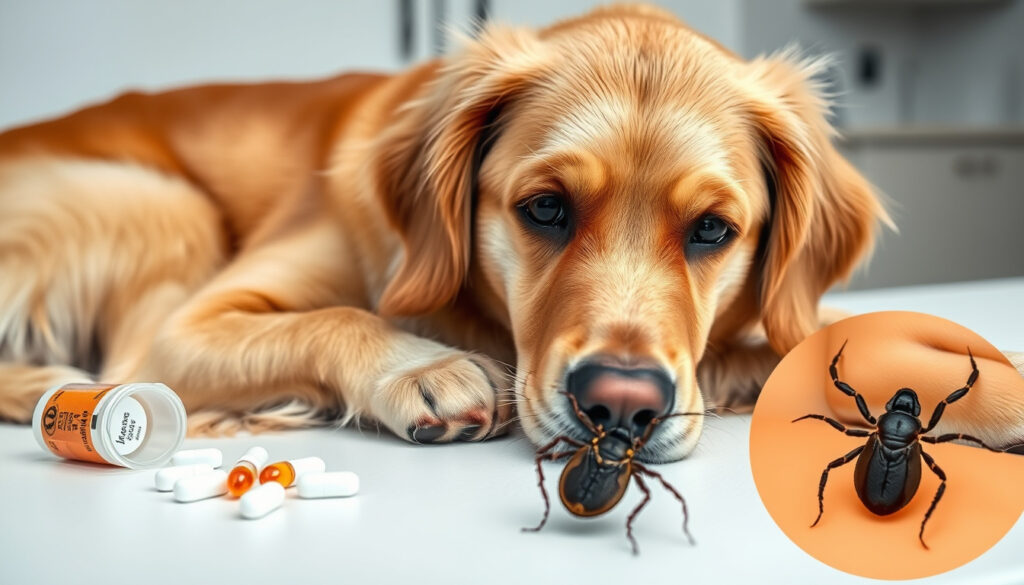
Lyme Disease in Dogs: Symptoms, Treatment and Prognosis
Your dog seems fine, then one day you notice she’s a little off her food. With Lyme disease, the bacteria can already be spreading internally by the time any visible sign appears, and most dogs never show symptoms at all.
Causative agent: Borrelia burgdorferi bacterium · Transmission method: Infected tick bite · Common symptoms: Fever, loss of appetite, lameness, swollen joints · Standard treatment duration: 30-day course of antibiotics · High-risk areas: Northeastern USA
Quick snapshot
- Transmitted only by tick bite, not dog-to-dog (Ohio State Vet College)
- Antibiotics resolve most acute cases (AVMA)
- 90%+ of infected dogs show no symptoms initially (AVMA)
- Exact life expectancy varies by case severity
- True prevalence of asymptomatic carriers
- Current 2025-2026 seroprevalence data unavailable
- Symptoms emerge 2-5 months post-infection (AVMA)
- Tick must attach 24+ hours before transmission (Ohio State Vet College)
- C6 antibodies detectable 3-5 weeks post-infection (DVM360)
- Early antibiotics prevent kidney damage
- Most treated dogs live normal lifespans
- Lyme nephritis is the serious complication to prevent
| Attribute | Value |
|---|---|
| Causative bacterium | Borrelia burgdorferi |
| Vector | Black-legged tick (Ixodes scapularis) |
| Incubation period | 2-5 months typically |
| Test type | SNAP 4Dx or similar serology |
| Vaccine availability | Yes, in endemic areas |
What are the first symptoms of Lyme disease in a dog?
Early signs like fever and lameness are the most common indicators that something is wrong. Fever, loss of appetite, and reluctance to move often show up before the more obvious limping begins. Joint swelling makes the affected leg visibly puffy, and your dog may lick or bite at the sore spot repeatedly. Unlike humans, most infected dogs never develop the characteristic bulls-eye rash — so watch for behavioral shifts rather than skin markers.
Early signs like fever and lameness
Lameness that shifts between different legs over days or weeks is a hallmark sign. According to Global Lyme Alliance, Lyme disease in dogs produces intermittent lameness, swollen joints, swollen lymph nodes, fever, fatigue, and decreased appetite. The lameness typically develops 2-6 months after an infected tick bite, according to Ohio State Vet College (Official fact sheet).
Joint pain and swelling indicators
Joint pain manifests as stiffness after rest, reluctance to jump or climb stairs, and visible swelling around wrists, elbows, or hocks. MedVet (Specialty veterinary hospital) notes that signs include lameness, kidney issues, and fever. The swelling may come and go, moving from one leg to another, which confuses owners who expect a single consistent limp.
What are the three stages of Lyme disease in dogs?
Lyme borreliosis progresses through distinct stages, each requiring different levels of veterinary attention. The early localized stage occurs in the first days to weeks after transmission, often with no outward signs. Early disseminated disease develops weeks to months later as bacteria spread through the bloodstream, producing the joint pain and fever owners typically notice. Chronic Lyme disease involves lasting damage to joints and organs, particularly the kidneys.
Acute stage symptoms
During the acute phase, your dog may run a fever, lose interest in food, and show the first hints of shifting lameness. The MedVet (Specialty veterinary hospital) confirms that the acute stage brings lameness, fever, and kidney issues including vomiting, weight loss, increased thirst, and increased urination. This is the window when 30-day antibiotic treatment works most effectively.
Chronic Lyme effects
Long-term joint damage and Lyme nephritis represent the chronic stage’s most serious consequences. According to AVMA (American Veterinary Medical Association), 1-5% of infected dogs develop Lyme nephritis, a severe kidney condition that causes edema, weight loss, and vomiting. Global Lyme Alliance warns that untreated Lyme disease can lead to kidney failure.
Chronic Lyme damage to kidneys is often irreversible. Early detection through annual screening is your only real safeguard against this outcome.
How do dogs act if they have Lyme disease?
Behavioral changes often precede obvious physical symptoms. Dogs with Lyme disease typically become less active, sleep more, and show reduced enthusiasm for activities they normally enjoy. The fatigue is more pronounced than ordinary post-walk tiredness — it persists even after rest and may coincide with a duller coat or generally under-the-weather appearance.
Behavioral changes
You may notice your dog pulling away from touch, especially around swollen joints. Reduced appetite means skipped meals or disinterest in treats. According to MedVet (Specialty veterinary hospital), signs include loss of appetite alongside lameness and fever. Cornell Vet (College of Veterinary Medicine) recommends prompt veterinary care when these behavioral shifts appear.
Neurological signs
In rare cases, Lyme disease affects the nervous system. Global Lyme Alliance (Patient advocacy organization) notes that neurological symptoms occur in some dogs. These may include facial paralysis, seizures, or personality changes. If your dog shows any neurological signs — circling, head tilt, or unprovoked aggression — seek emergency veterinary care immediately.
Dogs serve as excellent sentinels for human Lyme disease risk. When canine cases rise in an area, human infection rates typically follow within weeks.
How long can dogs live with Lyme disease?
The prognosis depends heavily on timing. Dogs treated with antibiotics during the acute stage typically recover fully and live normal lifespans. The critical variable is whether the infection reaches the kidneys before treatment begins — kidney involvement complicates the prognosis significantly.
Life expectancy factors
According to AVMA (American Veterinary Medical Association), most dogs treated promptly return to their normal lives. Merck Vet Manual (Peer-reviewed reference) notes that Lyme disease is endemic in Northeast, upper Midwest, and Pacific coast regions and expanding globally. The key factor is catching it before chronic kidney damage develops.
Prognosis with treatment
The standard treatment is a 30-day antibiotic course that resolves acute infection in most cases, according to AVMA. Chronic cases may have ongoing issues requiring extended therapy or supportive care for organ damage. PMC/NIH (Peer-reviewed medical research) reports that canine Lyme incidence is 2-3%, meaning most exposed dogs never develop clinical disease.
Can Lyme disease in dogs be cured?
Antibiotics eliminate the bacteria in most cases, but “cure” depends on when treatment starts. Acute Lyme disease responds well to a standard course of doxycycline or amoxicillin. Chronic Lyme affecting the kidneys is managed rather than cured, making early detection the difference between a full recovery and ongoing health complications.
Treatment protocols
VCA Hospitals (Animal hospital network) confirms that doxycycline is the antibiotic of choice, followed by amoxicillin and azithromycin as alternatives. AVMA specifies that the standard treatment is a 30-day course, with longer durations for some cases.
Prevention steps
Prevention is genuinely more effective than treatment. Virginia Tech Vet (University teaching hospital) recommends year-round flea and tick prevention and avoiding tick hotspots like long grass. Cornell Vet (College of Veterinary Medicine) endorses year-round tick control, regular checks, prompt removal, avoiding wooded areas, and vaccination.
The Lyme vaccine is roughly 60% to 86% effective, according to Global Lyme Alliance (Patient advocacy organization). That’s a useful layer, but it’s not a substitute for year-round tick prevention.
Steps for diagnosis and next steps
A structured approach helps you act quickly if you suspect Lyme exposure. Each step builds on the previous one, from home observation through veterinary diagnosis and into treatment or prevention planning.
- Step 1: Monitor for symptoms after outdoor activity. Track any changes in appetite, energy level, or gait starting 2-6 weeks after walks in wooded or grassy areas. Note any limping, especially if it shifts between legs over days.
- Step 2: Perform a tick check. Check your dog’s ears, armpits, groin, and between toes after every outdoor outing. The tick must attach for 24+ hours to transmit Lyme, according to Ohio State Vet College (Official fact sheet).
- Step 3: Book a veterinary appointment. Describe specific symptoms and any known tick exposure. Your vet will perform a physical exam checking for joint swelling, fever, and lymph node enlargement.
- Step 4: Request diagnostic testing. The SNAP 4Dx test detects C6 antibodies 3-5 weeks post-infection. DVM360 (Veterinary clinical journal) notes that C6 antibody testing is specific for natural exposure. Testing before 3-5 weeks may give a false negative.
- Step 5: Begin antibiotic treatment if positive. Standard protocol is doxycycline for 30 days. Monitor your dog for response — fever typically breaks within 24-48 hours, though lameness may take longer to resolve.
- Step 6: Follow up with kidney function testing. If clinical signs were present, your vet may recommend blood work and urinalysis to assess kidney health. Lyme nephritis risk is 1-5% in infected dogs per AVMA.
- Step 7: Establish year-round prevention. Discuss tick prevention products, vaccination in endemic areas, and yard management strategies with your vet. Global Lyme Alliance recommends 12 months-per-year prevention in high-risk regions.
The regional picture: where Lyme risk is growing
Geographic patterns matter for assessing your dog’s risk. Today’s Veterinary Practice (Peer-reviewed veterinary journal) documents that the blacklegged tick’s range has doubled in the past 20 years, and seroprevalence data from 2010-2017 shows a shifting landscape: declining rates in states like Connecticut and New Jersey, but increasing in Maine, New York, Pennsylvania, Michigan, and the Carolinas.
In highly endemic regions, more than 70% of local adult blacklegged ticks carry B. burgdorferi. This means a single walk through the wrong grass could expose your dog to multiple infected ticks simultaneously.
The Northeast and upper Midwest carry the highest cumulative risk, with Merck Vet Manual confirming these as primary endemic zones. But the map is expanding: I. scapularis now occupies territory far beyond its historical range, and southern states are seeing rising seroprevalence as tick populations shift northward.
The implication: even if Lyme wasn’t on your radar a few years ago, it may be now. Mid-Atlantic veterinarians recommend year-round prevention regardless of season.
Summary
Lyme disease in dogs is manageable when caught early but devastating when overlooked. The standard 30-day doxycycline protocol resolves acute infections in most dogs, yet the bacteria can spread to the kidneys before symptoms appear. For dog owners in endemic regions, year-round tick prevention, annual screening, and prompt attention to shifting lameness or fever are not optional — they are the difference between a treated recovery and chronic kidney disease. Your vet is your first and best line of defense: the moment you suspect exposure, call them.
“By the time symptoms occur, the bacteria causing Lyme disease, may already be widespread in the body.”
“Dogs serve as excellent sentinels for human Lyme disease risk.”
Related reading: natural remedies for symptoms
The bacterial infection Lyme disease, detailed in this Lyme disease overview, spreads to dogs via tick bites and demands early antibiotic intervention for best prognosis.
Frequently asked questions
How does Lyme disease affect pets?
Lyme disease primarily affects dogs’ joints, causing lameness, fever, and swollen lymph nodes. In 1-5% of infected dogs, it progresses to Lyme nephritis, a serious kidney condition. Most dogs (90%+) infected show no signs, unlike humans, according to AVMA.
How painful is Lyme disease in dogs?
Joint swelling and lameness cause significant discomfort. Dogs may lick or bite at affected joints, show reluctance to move, and display stiffness after rest. Neurological involvement, while rare, can cause more severe pain and behavioral changes.
What are 5 surprising symptoms of Lyme disease?
Beyond lameness and fever, watch for loss of appetite, fatigue that persists after rest, increased thirst and urination (kidney involvement), and in rare cases, facial paralysis or seizures. Many dogs show no symptoms at all, which makes routine screening particularly valuable.
What is the silent killer of dogs?
Lyme nephritis is the serious complication often called a silent threat because it develops without obvious early warning signs. By the time symptoms like vomiting, weight loss, and fluid retention appear, permanent kidney damage may already exist.
How to test for Lyme disease in dogs?
The SNAP 4Dx test is the standard screening tool, detecting C6 antibodies specific to natural Borrelia burgdorferi infection. Antibodies become detectable 3-5 weeks post-bite, per DVM360. Your vet may also run a Quant C6 test to measure antibody levels and guide treatment decisions.
Is Lyme disease vaccine safe for dogs?
The Lyme vaccine is generally safe for most dogs, though side effects are possible with any vaccine. Global Lyme Alliance notes it’s roughly 60-86% effective. Your vet can advise whether vaccination fits your dog’s profile, particularly if your area is endemic or your dog has had vaccine reactions before.
Can humans get Lyme disease from dogs?
No. Humans contract Lyme disease only through the bite of an infected tick, not from infected dogs or other animals. Cornell Vet confirms transmission requires tick exposure. That said, a dog with Lyme in the household signals tick pressure in your environment — take that as a cue to tighten prevention for everyone.
More related posts
 High Potential Season 2: 18 Episodes, Premiere & Season 3
 The Night Before Christmas: Poem, Controversy, and Movie Guide
 Naked and Famous Cocktail: Recipe, History, and Tips
 WGU Student Portal Login: How to Access Your Account
 Jumanji Welcome to the Jungle – Plot, Cast, Reviews & Where to Watch
 A Man on the Inside: Season 3 Update, Cast & Review (2025)