Best Ropa Vieja Canaria Near Me: Canarian vs Cuban Guide
There’s a dish that goes by the name “old clothes” but tastes anything but worn-out. Ropa vieja canaria, with its chickpeas and shredded meat, is a humble Canarian classic that has traveled across the Atlantic and become a beloved staple in Cuba.
Origin country: Spain (Canary Islands) and Cuba ·
Literal translation: Old clothes ·
Key ingredient: Shredded beef flank or brisket ·
Average calories per serving (USDA): 285 kcal
Quick snapshot
- Ropa vieja originated in the Canary Islands (Tenerife Experiences (Canarian food guide))
- Cuba considers it a national dish (Encyclopaedia Britannica (reference work))
- Flank or brisket is the standard meat (Allrecipes (recipe hub))
- Exact date of dish creation is undocumented
- Regional home recipes vary widely, especially in Canarian households
- Origin: Canary Islands, later adopted in Cuba (19th–20th century) (Encyclopaedia Britannica (reference work))
- Search for “ropa vieja canaria near me” in restaurant directories or visit Canarian restaurants in Las Palmas
Here is a quick reference table of key facts.
| Label | Value |
|---|---|
| Origin | Canary Islands, Spain |
| National dish of | Cuba |
| Main meat | Beef flank or brisket |
| Calories (USDA) | 285 per 1-cup serving |
| Literal meaning | Old clothes |
What country is famous for ropa vieja?
Origins in the Canary Islands
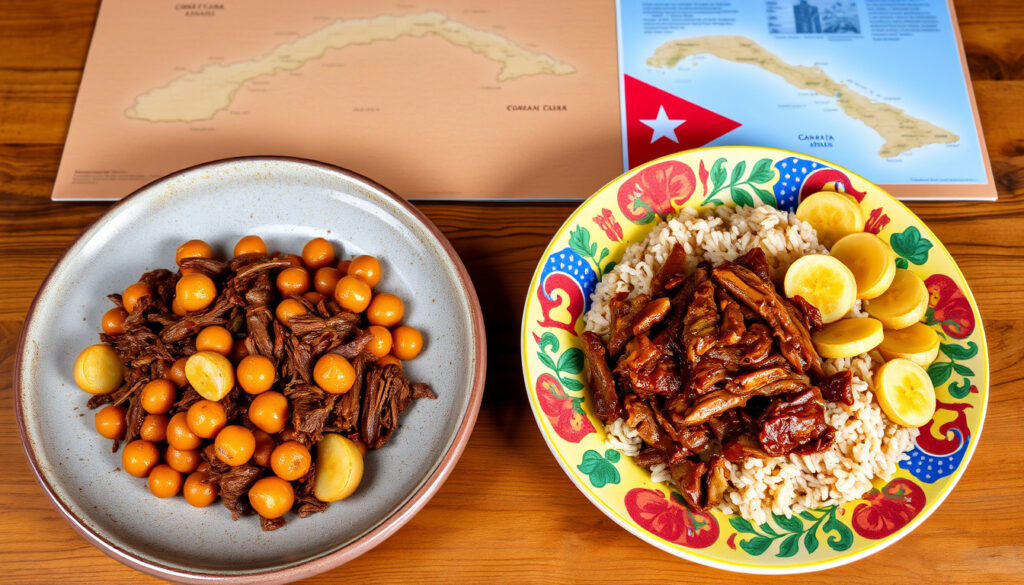
Ropa vieja traces its roots to the Canary Islands, where it was originally a way to use leftover meat from stews. The Canarian version is built around chickpeas, shredded beef and chicken, and a sofrito of onion, pepper, tomato, and garlic, often finished with fried potatoes and a splash of white wine (Tenerife Experiences). A recipe from Lanzarote adds white wine as an optional touch and emphasizes the use of leftover meat (Lanzarote.com (travel guide)). Some versions even include green beans or carrots, showing household variation across the islands.
One Canarian recipe from Villa Gran Canaria uses 400 g chickpeas, shredded chicken and beef, and fried potatoes (Villa Gran Canaria (travel & food blog)). The dish is so closely tied to the islands that locals often serve it during holidays and family gatherings.
Cuba’s adoption and fame
Ropa vieja arrived in Cuba with Spanish colonizers and was adapted using local ingredients. Today it is widely considered the national dish of Cuba (Encyclopaedia Britannica). The Cuban version is a tomato-based shredded beef dish, typically made with flank steak slow-cooked in a sofrito of tomatoes, bell peppers, onions, garlic, and spices (The Spruce Eats (culinary site)). It is almost always served with white rice, black beans, and fried plantains.
The contrast between the two versions is striking: Canarian ropa vieja is a leftovers stew with chickpeas and often mixed meats, while Cuban ropa vieja is a dedicated beef dish with a bold tomato sauce. Four differences, one pattern: the Canarian style is resourceful and earthy, the Cuban style is vibrant and saucy.
If you’re hunting for “ropa vieja canaria near me,” you’ll find a dish that prioritizes texture and subtlety over the bold tomato punch of the Cuban version. Expect chickpeas, not bell peppers, as the defining sidekick.
Here is a detailed comparison of the two versions.
| Aspect | Canarian Ropa Vieja | Cuban Ropa Vieja |
|---|---|---|
| Main meat | Beef and chicken (often leftovers) | Beef flank or brisket only |
| Legumes/vegetables | Chickpeas, potatoes, sometimes carrots or green beans | Tomatoes, bell peppers, onions |
| Base sauce | Sofrito with white wine, paprika, thyme, bay leaf | Tomato-based sofrito with garlic, cumin, oregano |
| Texture | Moist but not saucy; chickpeas add bite | Shredded beef simmered in a thick sauce |
| Typical sides | Papas arrugadas or bread | White rice, black beans, plantains |
| Cultural role | Humble leftovers stew, holiday dish | National dish, everyday comfort food |
What is the difference between ropa vieja and vaca frita?
Preparation methods differ
Ropa vieja is slow-cooked until the meat is tender enough to shred, then simmered in a sauce. Vaca frita, on the other hand, involves boiling the beef first, then shredding it and frying it until crispy (The Spruce Eats). The frying step gives vaca frita a completely different texture — crunchy edges and a chewy center.
Texture and flavor profiles
Ropa vieja is tender and saucy; vaca frita is crispy and often marinated in citrus and garlic before frying. While both use beef, vaca frita prioritizes a charred, tangy finish, whereas ropa vieja is all about slow-cooked depth. For anyone seeking “ropa vieja canaria near me,” vaca frita will not satisfy that craving — they are distinct dishes.
If you order vaca frita thinking it’s ropa vieja, you’ll get crispy beef, not the shredded stew you wanted. Check the menu description carefully.
The pattern: ropa vieja is a braised stew, while vaca frita is a fried preparation. The distinction matters for texture and flavor expectations.
What kind of meat is used for ropa vieja?
Flank steak or brisket preferred
Both Canarian and Cuban versions rely on beef flank or brisket as the primary meat (Allrecipes). The Canarian version often adds chicken, using leftover meat from a previous stew (Villa Gran Canaria). This dual-protein approach is a hallmark of the Canarian style.
Why tougher cuts work best
Slow cooking breaks down collagen in tough cuts like brisket, making the meat tender enough to shred (The Spruce Eats). This is why ropa vieja is a classic “economical” dish — it transforms cheap cuts into something rich and satisfying.
Many Cuban restaurants outside Cuba serve a version closer to the Americanized “ropa vieja” — heavy on sauce and light on chickpeas. If you want authentic Canarian style, confirm the menu mentions chickpeas.
The catch: tougher cuts require longer cooking, but the result is a tender, flavorful dish that belies its humble ingredients.
Why is ropa vieja popular in Cuba?
Historical roots and cultural significance
Ropa vieja arrived in Cuba with Spanish colonizers and was adapted using local ingredients like tomatoes and bell peppers (Encyclopaedia Britannica). Over time, it became a symbol of Cuban home cooking, often served at family gatherings and celebrations.
Affordable and versatile dish
The dish uses inexpensive cuts of beef and stretches them with sauce and rice. It is commonly served with black beans, plantains, and white rice, making it a complete meal (The Spruce Eats). This affordability and versatility help explain its enduring popularity in Cuba.
Many Cuban restaurants outside Cuba serve a version closer to the Americanized “ropa vieja” — heavy on sauce and light on chickpeas. If you want authentic Canarian style, confirm the menu mentions chickpeas.
The implication: Cuban ropa vieja’s popularity is rooted in its accessibility and adaptability, making it a staple of everyday Cuban cuisine.
Upsides
- Ropa vieja canaria is a hearty, one-dish meal with protein and fiber from chickpeas.
- It uses leftover meat, reducing food waste.
- Canarian version is naturally gluten-free when served without bread.
- Rich in flavor from slow cooking and aromatic spices.
Downsides
- Canarian ropa vieja can be high in sodium depending on seasoning.
- Chickpeas may not appeal to all palates.
- Authentic versions are hard to find outside the Canary Islands.
- Preparation time is long (2–3 hours minimum).
What we know vs what’s unclear
Confirmed facts
- Ropa vieja originated in the Canary Islands (Tenerife Experiences).
- Cuba considers it a national dish (Encyclopaedia Britannica).
- Flank or brisket is the standard meat (Allrecipes).
- Canarian version includes chickpeas and often mixed meats (Villa Gran Canaria).
What’s unclear
- Exact date of dish creation is undocumented.
- Regional home recipes may differ from restaurant versions.
Ropa vieja canaria is a perfect example of resourceful cooking — turning leftover stew meat and chickpeas into a dish that’s now celebrated across the Atlantic.
— Encyclopaedia Britannica (reference work)
According to USDA data, a 1-cup serving of ropa vieja contains approximately 285 calories, 22 g of protein, and 12 g of fat.
— USDA Food and Nutrition Service (government nutrition database)
For diners in the United States or Europe searching for “best ropa vieja canaria near me,” the choice is clear: seek out Canarian restaurants or specialty spots that highlight chickpeas and mixed meats. The Cuban version is easier to find, but it’s not the same dish. If you want the authentic Canarian experience, ask the restaurant if their ropa vieja includes chickpeas — and if they don’t, keep looking.
secrettenerife.co.uk, thebeanbites.com, martacooking.wordpress.com, spanishsabores.com, youtube.com, cookingasprocrastination.wordpress.com, officialtaxitenerife.com, partaste.com
For a deeper dive into the historical roots and regional variations, check out this Canarian ropa vieja guide that traces the dish back to medieval Gran Canaria.
Frequently asked questions
Is ropa vieja canaria gluten-free?
Yes, the traditional Canarian recipe uses no wheat flour. The dish is naturally gluten-free when served without bread. Always confirm with the restaurant if you have celiac disease.
What sides are served with ropa vieja canaria?
Common sides include papas arrugadas (wrinkled potatoes), white rice, bread, or a simple salad. Some versions are served with fried potatoes mixed into the dish itself (Advartis (Canarian recipe site)).
How long does it take to cook ropa vieja?
Total cooking time is about 2 to 3 hours, including simmering the meat until tender and then shredding and finishing the dish. A slow cooker can reduce hands-on effort.
Can I make ropa vieja in a slow cooker?
Absolutely. Brown the meat, then cook on low for 6–8 hours with the sofrito and chickpeas. Shred the meat and return to the pot for 30 minutes. This method is popular for home cooks.
Does ropa vieja freeze well?
Yes, it freezes beautifully for up to 3 months. Store in an airtight container. Thaw in the fridge overnight and reheat gently on the stovetop.
What wine pairs with ropa vieja canaria?
A light red wine like a young Tempranillo or a dry white from the Canary Islands (e.g., Listán Blanco) complements the earthy chickpeas and shredded meat.
Related reading: White Castle Near Me · Baskin-Robbins Near Me
More related posts
 John 16:33 Meaning: Peace in Tribulation & Overcoming the World
 Good Books to Read: Top Recommendations for Every Taste
 Independent vs Dependent Variable: Key Differences
 Blood Work Near Me – Trusted Labs for Local Testing
 Matthew Lawrence Movies and TV Shows – Complete Filmography 1987-2024
 No Bake Cookies Recipe: Fix Gooey & Crumbly Texture
 Red Dead Redemption 2 Review: Worth Playing in 2025
 Easy Recipe for Banana Bread: Moist and Foolproof