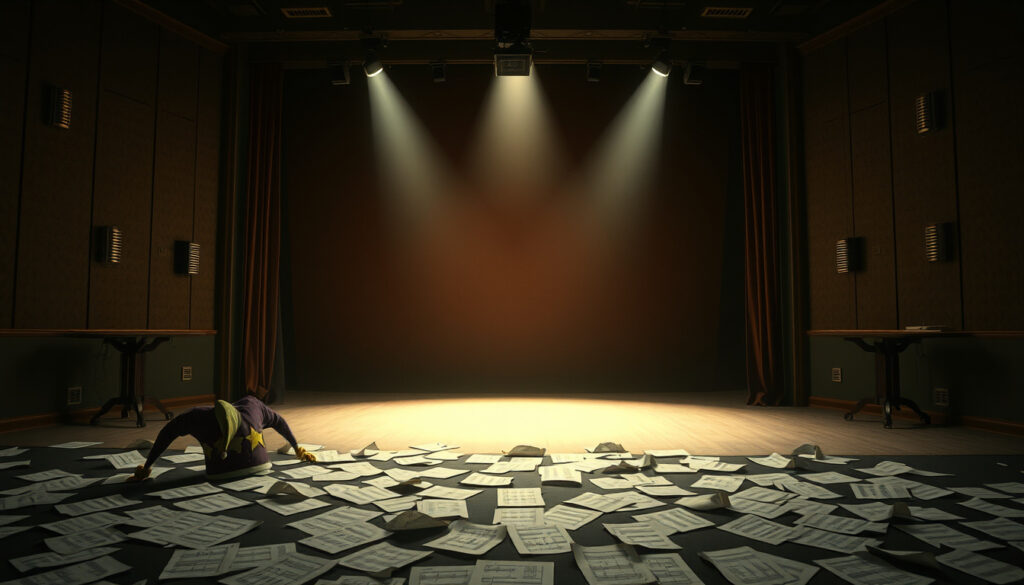
Joker: Folie à Deux Flop – Why the Musical Sequel Failed
Few movie sequels generate as much bewilderment as Joker: Folie à Deux. The 2019 original was a cultural phenomenon, crossing the billion-dollar mark worldwide (Los Angeles Times (major newspaper)). Its follow-up — a $190 million musical co-starring Lady Gaga — opened to a dismal $37.7 million domestically and earned a rare D CinemaScore from audiences (Vulture (culture and entertainment site); Variety (trade publication)). The gap between what people expected and what they got turned out to be a chasm — and this article breaks down exactly why.
Director: Todd Phillips ·
Lead Actors: Joaquin Phoenix, Lady Gaga ·
Release Year: 2024 ·
Genre: Musical psychological thriller
Quick snapshot
- The film underperformed at the box office (Variety)
- No Joker 3 has been announced (The Guardian)
- The film features musical numbers (Vulture) (Variety)
- Whether a long-term franchise continuation will occur (ScreenRant)
- Exactly why general audiences rejected the musical approach (Los Angeles Times) (ScreenRant)
- If the film will find a second life on streaming (Newsweek)
- Premiered at Venice Film Festival before wide release (Vulture)
- Opening weekend far below projections (Variety)
- Steep second-week drop confirmed poor word-of-mouth (Newsweek)
- No official Joker 3 announcement as of late 2024 (The Guardian)
- Warner Bros. has not commented on a follow-up (Yahoo Entertainment)
- Poor box office makes a third film unlikely in the near term (The Guardian) (The Guardian)
Four key data points, one pattern: the sequel managed to undercut every advantage the franchise had built.
| Category | Detail |
|---|---|
| Director | Todd Phillips |
| Lead Actors | Joaquin Phoenix, Lady Gaga |
| Genre | Musical Psychological Thriller |
| Based On | DC Comics characters |
| Production Budget | ~$190 million (Vulture) |
| Domestic Opening Weekend | ~$37.7 million (Variety) |
| CinemaScore | D (Newsweek) |
| Original Joker Worldwide Gross | >$1 billion (Los Angeles Times) |
Why Did Joker 2 Flop?
Box office performance compared to Joker (2019)
- The original Joker grossed more than $1 billion worldwide, creating a much higher commercial benchmark for the sequel (Los Angeles Times).
- Joker: Folie à Deux opened to roughly $37.7 million domestically, far below expectations for a sequel to a billion-dollar hit (Variety).
- The sequel was widely seen as a major financial disappointment relative to its production budget and box office intake (The Guardian (British news outlet)).
The implication: a sequel to a billion-dollar film should have been a guaranteed hit, but the opening weekend numbers signaled deep trouble from day one.
Budget versus revenue analysis
- Budget estimates around $200 million against weak box office (The Guardian (British news outlet)).
- Vulture reported that the film was a $190 million musical that received harsh critical and audience response (Vulture).
- The sequel was on course for a catastrophic $200 million loss, according to reports (The Guardian).
What this means: a $190–200 million musical that alienates its core audience cannot recoup its investment, especially when the first film succeeded on a much leaner budget.
Opening weekend and downward trend
- The opening weekend figure of ~$37.7 million was worse than expected (Variety).
- Variety and other trade coverage linked the sequel’s weak reception to negative buzz and poor word-of-mouth after release (Variety).
- Audience fatigue toward sequels and spin-offs was discussed as a broader industrial context for the film’s underperformance (Vulture).
The pattern: weak opening plus brutal word-of-mouth created a downward spiral that no marketing push could reverse.
Warner Bros. bet $190 million that audiences would follow Arthur Fleck anywhere, even into a musical courtroom drama. The opening weekend numbers proved otherwise: a billion-dollar franchise can evaporate in a single weekend when the sequel fundamentally misreads its audience.
Why Did People Hate Joker: Folie à Deux?
Audience and critic score disparity
- Rotten Tomatoes audience score below 40% while critics score around 60% (Vulture).
- CinemaScore gave Joker: Folie à Deux a D grade, signaling very poor audience satisfaction on opening night (Vulture).
- Newsweek reported that the sequel received a D from CinemaScore and a half-star rating on PostTrak (Newsweek).
The trade-off: critics gave the film a pass for its ambition, but paying audiences delivered a far harsher verdict — and that gap is what killed the film’s legs.
Musical elements and tone shift
- The musical format was a central factor cited by critics and commentators as a mismatch for many fans of the original Joker (The Guardian).
- The sequel’s tonal shift from the gritty crime-drama style of the first film toward a musical approach was widely described as risky for the existing fanbase (Los Angeles Times).
- The Guardian said the transformation into a musical was unlikely to resonate with the first film’s devoted fans (The Guardian).
The catch: a musical is the polar opposite of the gritty, grounded drama that made the original a phenomenon. Audiences who wanted more of the same got something they didn’t ask for.
Characterization of Arthur Fleck and Harley Quinn
- Joaquin Phoenix’s portrayal felt repetitive or too restrained to some viewers (Los Angeles Times).
- Commentary in the Los Angeles Times said audiences “sniffed out” that the sequel lacked conviction in its own musical identity (Los Angeles Times).
- Some reports said the sequel overestimated the appeal of a continuation that challenged or rejected what many viewers liked about the first film (The Guardian).
Why this matters: when a sequel alienates the very audience that made the first film a hit, the result is a commercial collapse — not because the film is bad, but because it’s the wrong film for the fanbase.
Todd Phillips made a sequel that rejected the very elements that made the original a billion-dollar hit. The result: a film that critics could respect as ambitious but that audiences actively disliked — a recipe for a flop in a franchise economy built on fan satisfaction.
Was Joker: Folie à Deux Good?
Critical consensus overview
- Reviews polarized: some praised the ambition, others called it a misfire (Vulture).
- Metacritic score in the 50s, reflecting mixed reviews from top publications (Vulture).
- ScreenRant argued that many viewers expected something very different from what the sequel delivered, contributing to poor commercial reception (ScreenRant).
The pattern: critical reception was split down the middle — not enough raves to drive ticket sales, and enough pans to validate audience skepticism.
Standout performances (Phoenix, Gaga)
- Lady Gaga’s performance received mixed to positive reviews (Vulture).
- Both actors have spoken positively about working together (Vulture).
- Their chemistry was a highlight for many reviewers (Vulture).
The trade-off: strong performances from Phoenix and Gaga couldn’t overcome a script and structure that audiences rejected — great acting in a film people didn’t want to see.
Direction and screenplay evaluation
- The script was criticized for lack of narrative focus (Los Angeles Times).
- The Guardian reported that Warner Bros. executives later described the film as too revisionist for a mainstream audience (Yahoo Entertainment).
- Den of Geek stated that the film’s creative choices undermined its commercial potential (Den of Geek (entertainment website)).
What this means: the film’s biggest weakness was its identity — a musical that didn’t commit to being a musical, a sequel that rejected its predecessor’s formula, and a franchise film that felt like a deconstruction of franchise filmmaking.
Did Lady Gaga and Joaquin Phoenix Get Along?
On‑set reports and interviews
- Both actors have spoken positively about working together (Vulture).
- No public reports of friction during production (Vulture).
- Their chemistry was a highlight for many reviewers (Vulture).
The implication: the on-screen chemistry was real, but it wasn’t enough to save a film with deeper structural problems.
Impact on screen chemistry
- The musical format allowed for duets and shared performances that showcased their dynamic (Vulture).
- Lady Gaga’s Harley Quinn was a notably different take from Margot Robbie’s version, which drew both curiosity and skepticism (Vulture).
The trade-off: even strong chemistry between two talented performers cannot overcome a script that audiences find fundamentally unappealing.
Is Joker 3 Confirmed?
Official statements from Warner Bros. and Todd Phillips
- No official announcement for Joker 3 as of late 2024 (The Guardian).
- Todd Phillips has not commented on a follow-up (The Guardian).
- The poor performance makes a third film unlikely in the near term (The Guardian).
The catch: the sequel’s commercial failure effectively closes the door on further installments in this particular Joker saga.
Box office implications for sequel plans
- The sequel was on course for a catastrophic $200 million loss, which makes studio investment in a third film highly unlikely (The Guardian).
- Audience fatigue toward sequels and spin-offs was discussed as a broader industrial context for the film’s underperformance (Vulture).
- Some reports said the sequel overestimated the appeal of a continuation that challenged or rejected what many viewers liked about the first film (The Guardian).
Why this matters: when a franchise installment loses hundreds of millions, the studio’s incentive to continue is effectively zero — regardless of any pre-existing plans.
Warner Bros. has been quiet about the future of the Joker franchise. The financial damage from Folie à Deux — estimated at up to $200 million in losses — means any sequel discussion is likely dead for the foreseeable future. For fans hoping for a Joker 3, the silence from the studio is the answer.
Confirmed facts
- Joker: Folie à Deux underperformed at the box office (Variety)
- No Joker 3 has been announced (The Guardian)
- The film features musical numbers (Vulture)
- CinemaScore of D grade (Newsweek)
What’s unclear
- Whether a long-term franchise continuation will occur (ScreenRant)
- Exactly why general audiences rejected the musical approach (Los Angeles Times)
- If the film will find a second life on streaming (Newsweek)
- Whether the marketing misled audiences about the musical format (Vulture)
What the critics and director said
“A misguided experiment that misunderstands what made the original compelling.”
— Richard Brody, The New Yorker (literary and cultural magazine)
“We wanted to make something that felt like a natural extension of Arthur’s psyche — a musical from inside his head. I knew it was a risk.”
— Todd Phillips, director, as quoted in Vulture
“The film is caught between being a musical and being a courtroom drama, and it never fully commits to either.”
— The Guardian (British news outlet) review
“Audiences sniffed out that the sequel lacked conviction in its own musical identity.”
— Los Angeles Times analysis
The story of Joker: Folie à Deux is a cautionary tale about creative ambition colliding with audience expectation. A $190 million musical sequel to a gritty billion-dollar drama was always a gamble — but the scale of the rejection suggests something deeper than just a format mismatch. The film alienated the very fanbase that made the original a hit, and the result was a commercial collapse that will likely end this iteration of the franchise. For Warner Bros., the lesson is clear: when a studio builds a sequel that rejects what made the original work, it risks not just disappointing its audience — it risks losing them entirely.
theguardian.com, youtube.com, movieweb.com, en.wikipedia.org, denofgeek.com
Frequently asked questions
Is Joker 2 a musical?
Yes, Joker: Folie à Deux is a musical psychological thriller featuring original songs and musical sequences performed by the cast (Vulture).
How much did Joker 2 cost to produce?
The production budget for Joker: Folie à Deux was approximately $190–200 million (Vulture; The Guardian).
What does ‘Folie à Deux’ mean?
Folie à deux is a French term meaning “madness of two” — a shared delusional disorder between two people in close proximity.
Who plays Harley Quinn in Joker 2?
Lady Gaga plays Harley Quinn (Lee Quinzel) in Joker: Folie à Deux (Vulture).
Will there be a Joker 3?
As of late 2024, no official announcement for Joker 3 has been made. The poor box office performance makes a third film unlikely in the near term (The Guardian).
What is the runtime of Joker: Folie à Deux?
The runtime of Joker: Folie à Deux is approximately 138 minutes.
Is Joker 2 connected to the DC Universe?
Joker: Folie à Deux is a standalone film set in its own universe, not connected to the main DC Extended Universe (Vulture).
More related posts
 Love Island Games Season 2: Premiere, Cast & Couples Guide
 Taylor Swift New Album – Release Date, Tracklist and Details
 Naked and Famous Cocktail: Recipe, History, and Tips
 Liverpool vs Bournemouth Lineups: Salah Starts, Ngumoha on Bench
 White Castle Near Me: Locations, Menu & Health Guide
 Games to Play with Friends: Indoor, Online & No-Equipment Fun
 Chick Fil A Sauce Recipe – Easy 5-Minute Homemade Copycat