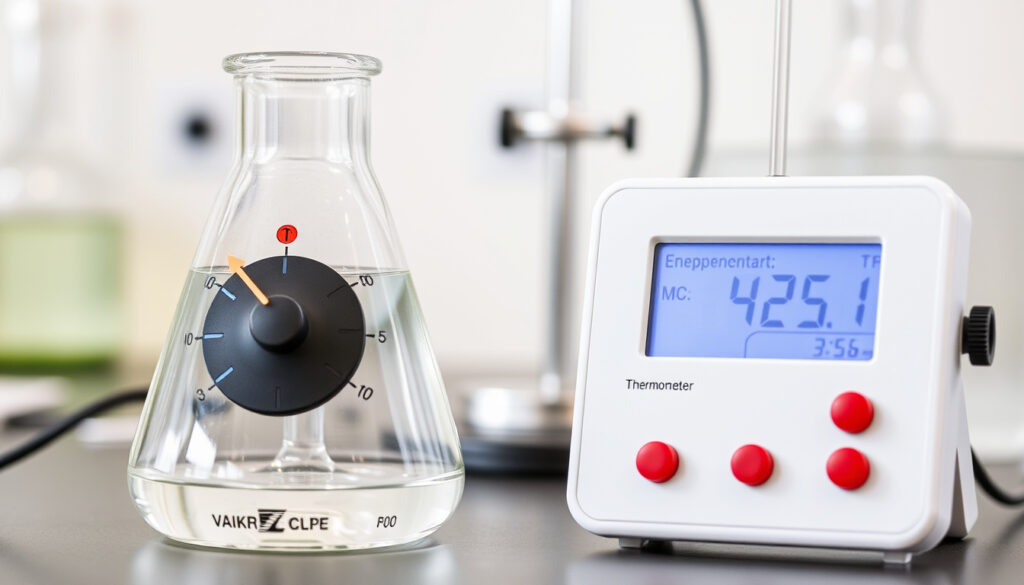
Independent vs Dependent Variable: Key Differences
Anyone who has set up a science experiment has faced the same puzzle: which variable do you change, and which one do you watch? The distinction between the independent and dependent variables is the foundation of experimental design. Understanding it is key to getting valid results in GCSE science, psychology, and even math problems.
Independent variable: The variable manipulated by the researcher ·
Dependent variable: The measured outcome that depends on the independent variable ·
Controlled variable: Factors kept constant to ensure valid results ·
Typical experiment design: One independent variable, one dependent variable, multiple controlled variables
Quick snapshot
- The independent variable is manipulated by the researcher (Revision Genie (GCSE revision resource))
- The dependent variable is the measured outcome (Scribbr (academic methodology guide))
- Controlled variables are kept constant to avoid bias (Revision Genie (GCSE revision resource))
- Whether a variable is independent or dependent can depend on the research question
- In some studies, there may be multiple independent or dependent variables
- The independent variable always precedes the dependent variable in time (Editage (academic publishing resource))
- Mastering variable identification is the first step toward designing valid experiments in science, psychology, and math
| Label | Value |
|---|---|
| Independent variable | The variable you change |
| Dependent variable | The variable you measure |
| Controlled variable | Variables you keep the same |
| Typical experiment | One independent, one dependent, multiple controlled |
Is the independent variable the one you change?
What is an independent variable?
- The independent variable is the factor the experimenter changes or manipulates. As Revision Genie (GCSE revision resource) puts it, it’s the factor you change on purpose.
- Scribbr (academic methodology guide) explains that the independent variable is the cause in a causal research study and can be manipulated, controlled, or used as a grouping variable.
- In math, the independent variable is often called the predictor or explanatory variable. Khan Academy (educational platform) defines it as a quantity being manipulated in an experiment.
What is a dependent variable?
- The dependent variable is the factor the experimenter measures to see the effect of the change, according to Revision Genie (GCSE revision resource).
- Scribbr (academic methodology guide) clarifies that the dependent variable is the effect in a causal study and is measured as the outcome.
- Editage (academic publishing resource) adds that the dependent variable is never assigned or manipulated by the researcher.
Many students get confused because the same variable can be independent in one study and dependent in another. The key is asking “Which one is being intentionally changed?” That determines the label, not the variable’s nature.
The implication: If you can answer “which variable is changed?” you’ve already identified the independent variable. Everything that follows depends on that choice.
What is the difference between independent, dependent, and constant variables?
How do constant variables differ from independent and dependent variables?
- Constant (controlled) variables are kept the same to avoid affecting the outcome. Revision Genie (GCSE revision resource) explains that they are the factors kept constant to make the test fair.
- Independent variable: changed by the researcher.
- Dependent variable: measured as the outcome.
- Without controlled variables, results may be invalid because other factors could cause the change.
Why are controlled variables important in experiments?
- Controlled variables ensure that any change in the dependent variable is due only to the independent variable.
- According to Revision Genie (GCSE revision resource), exam boards expect students to list at least three controlled variables in a typical GCSE experiment.
Three variable types, one pattern: independent (what you change), dependent (what you measure), controlled (what you keep the same). The comparison below shows how they contrast.
| Dimension | Independent variable | Dependent variable | Controlled variable |
|---|---|---|---|
| Researcher action | Manipulates or changes it | Measures it | Keeps it constant |
| Role in experiment | Cause | Effect | Confound preventer |
| Example (plant growth) | Amount of sunlight | Height of plant | Type of soil, water amount |
If you fail to control a key variable, your results are useless. A classic GCSE error is testing caffeine’s effect on reaction time without controlling for age or sleep – those are uncontrolled variables.
The pattern: The more controlled variables you list, the stronger your experiment’s validity. In GCSE mark schemes, naming three controlled variables often earns full credit.
What is an example of an independent and dependent variable?
Example in GCSE biology
- A common GCSE example: sunlight as the independent variable and plant height as the dependent variable (Revision Genie (GCSE revision resource)).
- Another: caffeine amount (independent) and reaction time (dependent) (Revision Genie (GCSE revision resource)).
- In a spring experiment, the force or weight applied (independent) and the extension of the spring (dependent) are reportedly used in GCSE revision videos (YouTube (GCSE science revision video)).
Example in psychology
- In GCSE psychology, amount of tutoring (independent) and exam score (dependent) is a typical example, as explained by MyTutor (GCSE tutoring service).
Example in math
- In math, the independent variable is often represented by x, and the dependent variable by y. Khan Academy (educational platform) explains that the value of the dependent variable depends on how the independent variable is manipulated.
“The independent variable is the cause. The dependent variable is the effect.”
— Scribbr (academic methodology guide)
The thread across all three subjects: the independent variable is always the one you control or choose, while the dependent variable is the result that shifts in response.
How do I know if a variable is dependent or independent?
Key questions to identify variables
- Ask: Which variable is being manipulated? That is the independent variable.
- Ask: Which variable is being measured? That is the dependent variable.
- The dependent variable depends on the independent variable – the name itself is a clue.
- Editage (academic publishing resource) adds that the independent variable always precedes the dependent variable in time.
Common mistakes to avoid
- Thinking that the variable you don’t change is the dependent variable – it’s actually a controlled variable.
- Assuming the independent variable must be numerical – it can be categorical (e.g., type of therapy).
- Confusing the dependent variable with the measured outcome in a regression – but the logic is the same.
The trick: If you still can’t tell, think of the word “depends” – the dependent variable depends on the independent variable. That relationship is the core of experimental design.
What are 5 examples of independent variables?
Examples across different fields
- Temperature in a chemical reaction experiment – the researcher changes the temperature to see how reaction rate changes.
- Amount of fertilizer in a plant growth study – the independent variable is the quantity of fertilizer applied.
- Type of therapy in a clinical trial – e.g., cognitive behavioural therapy vs. medication (categorical).
- Time spent studying in an educational study – study hours are manipulated to measure test scores.
- Dosage of a drug in a medical experiment – different doses are given to measure the effect on symptoms.
“The independent variable is never assigned or manipulated by the researcher – actually, that’s the opposite. It is manipulated by the researcher. The dependent variable is never manipulated.”
— Editage (academic publishing resource) (paraphrased)
A GCSE student who can list five different independent variables from different sciences shows they understand the concept – not just memorize a definition. Exam boards reward that transferable skill.
What’s clear and what’s not
Confirmed facts
- Independent variable is manipulated by the researcher.
- Dependent variable is the measured outcome.
- Controlled variables are kept constant to avoid bias.
What’s unclear
- Whether a variable is independent or dependent can depend on the research question.
- In some studies, there may be multiple independent or dependent variables.
Frequently asked questions
What is the independent variable in an experiment?
The independent variable is the factor the experimenter changes or manipulates. It is the presumed cause in a cause-effect relationship. (Scribbr (academic methodology guide))
What is the dependent variable in an experiment?
The dependent variable is the factor that is measured to see the effect of the independent variable. It is the outcome. (Revision Genie (GCSE revision resource))
Can there be more than one independent variable?
Yes, experiments can have multiple independent variables, but this makes the design more complex. GCSE experiments typically require only one independent variable to keep things straightforward.
Can there be more than one dependent variable?
Yes, it is possible to measure multiple dependent variables in one study. For example, in a plant growth experiment, you could measure height, number of leaves, and mass.
What is a controlled variable?
A controlled variable is a factor kept constant throughout the experiment so it does not affect the outcome. Without controlled variables, the experiment would not be fair. (Revision Genie (GCSE revision resource))
How do you identify the independent variable in a graph?
In science graphs, the independent variable is usually plotted on the x-axis (horizontal) and the dependent variable on the y-axis (vertical). In math, it is the same convention.
Why is it important to distinguish between independent and dependent variables?
Correctly identifying variables is essential for designing valid experiments, interpreting results, and avoiding misleading conclusions. It is a core skill assessed in GCSE science exams.
For a student preparing for GCSE exams, the distinction between independent and dependent variables is not just a vocabulary check – it is the logic that makes every experiment interpretable. Getting it right means fewer marks lost on method questions and a clearer path to designing your own investigations. The choice is clear: learn to spot the variable that changes, and everything else follows.
More related posts
 Open Food Near Me: Delivery & Takeaway Options in Ireland Now
 NY Inflation Refund Check 2025: Eligibility & Status Guide
 Elly De La Cruz: Twin, Sister’s Death, Contract & Stats
 Cynthia Erivo and Ariana Grande Relationship Rumors Explained
 Silk Press Near Me – Salons, Prices, Maintenance Guide
 Pool Tables Near Me: Best Places to Play and Buy in Dublin
 Cast of Saturday Night 2024 – Season 50 Roster and Changes
 Bankruptcy Attorney Near Me: Costs, Property & Debt Relief