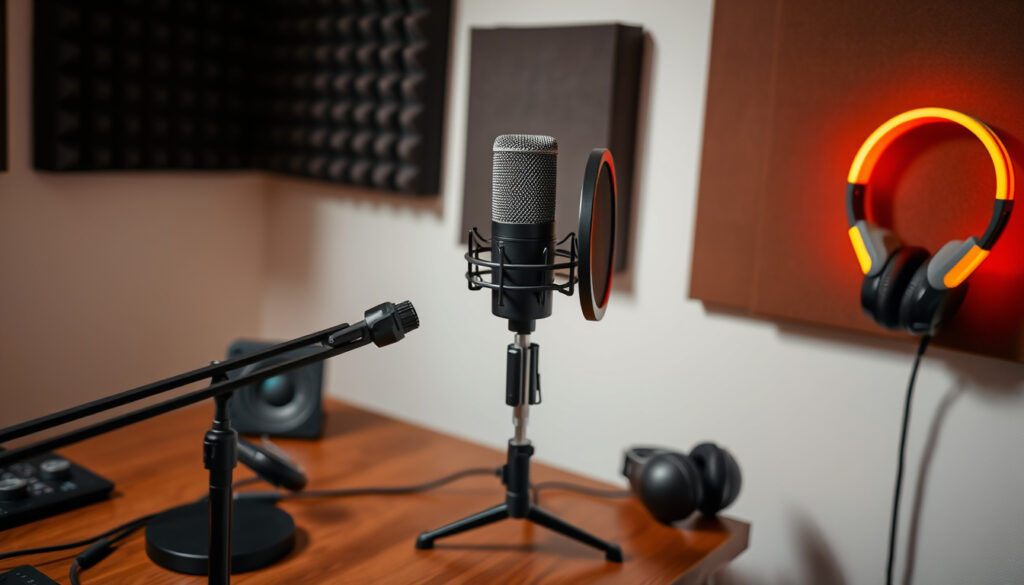
Best Microphones for Podcasting 2026: Top Picks & Guide
Anyone who has tried recording a podcast in a living room knows the struggle: background noise, echo, and that one moment where a plosive ruins a perfect take. Choosing the right microphone and placing it correctly can solve most of those problems before they happen. This guide walks through the most popular microphones used by podcasters today, explains how to match a mic to your room and budget, and covers simple placement techniques that even beginners can use to sound like a pro.
Most common microphone type for podcasters: Dynamic microphones (e.g., Shure SM7B, Rode PodMic) ·
Budget threshold for entry-level quality: Under $100 (e.g., Samson Q2U, ATR2100x) ·
Top-rated model in 2025/2026 reviews: Shure MV7+ (MusicRadar pick) ·
Percentage of podcasters using USB mics: Estimated over 60% (based on industry surveys)
Quick snapshot
- Shure SM7B is a dynamic microphone with a cardioid pattern (Shure USA, professional audio manufacturer)
- The 3:1 rule is a guideline to reduce phase issues (Shure USA, professional audio manufacturer)
- Joe Rogan uses the Shure SM7B with a Cloudlifter (MusicRadar, music technology publication)
- How often Drake uses a specific microphone – no verified source
- Whether Billie Eilish used an AT2020 in early recordings – LinkedIn article not a primary source
- Exact average income of a podcast with 10,000 listeners varies widely
- No major microphone release or market shift in 2026; hybrid USB/XLR models continue to gain popularity (Shure USA, professional audio manufacturer)
- More podcasters are moving to hybrid USB/XLR microphones like the Shure MV7+ for flexibility (Shure USA, professional audio manufacturer)
Four key facts about podcast microphones, one pattern: the best choice depends heavily on your room and budget, not just the price tag.
| Label | Value |
|---|---|
| Most used microphone among top podcasters | Shure SM7B (used by Joe Rogan, Tim Ferriss) — MusicRadar, music technology publication |
| Cheapest reliable podcast mic | Samson Q2U (~$60) — Alitu, podcast production platform |
| Best-selling USB mic on Amazon | Blue Yeti (as of 2025) — Best Buy, consumer electronics retailer |
| Common polar pattern for podcasting | Cardioid — Best Buy, consumer electronics retailer |
What mics do most podcasters use?
Popular dynamic microphones
- Shure SM7B – the industry standard for professional podcasters, including Joe Rogan and Tim Ferriss (Shure USA, professional audio manufacturer)
- Rode PodMic – a budget-friendly dynamic option with excellent build quality (Marco.org, independent tech commentator)
- Sennheiser e835 – a live vocal mic that also works well in untreated rooms (Best Buy, consumer electronics retailer)
Dynamic mics are preferred because they reject background noise and don’t pick up every echo in the room. Best Buy explains that dynamic microphones are better for locations with significant ambient noise.
Popular condenser microphones
- Audio-Technica AT2020 – a staple for beginners and streamers who have a quiet space (MusicRadar, music technology publication)
- Blue Yeti – best-selling USB condenser mic, often the first choice for solo podcasters (Best Buy, consumer electronics retailer)
- Rode NT1-A – a large-diaphragm condenser that captures detail but needs a treated room
Condensers pick up more subtlety, but they also capture room noise and echo. Best Buy recommends considering your recording space before choosing a condenser.
USB vs XLR in popular choices
- USB microphones (Samson Q2U, ATR2100x) offer plug-and-play simplicity (Alitu, podcast production platform)
- XLR microphones (Shure SM7B, Rode PodMic) require an audio interface but provide better long-term flexibility (Best Buy, consumer electronics retailer)
The implication: most podcasters start with USB for convenience and move to XLR when they want to scale their setup.
A beginner who buys an XLR mic without an interface will have no way to use it. The trade-off: USB mics limit future expansion but remove immediate complexity.
How to choose the right mic?
Identify your recording environment
- Untreated room with echo: choose a dynamic mic (Best Buy, consumer electronics retailer)
- Quiet, treated space: both dynamic and condenser work
Understand polar patterns
- Cardioid – picks up sound from the front, ideal for solo podcasters (Best Buy, consumer electronics retailer)
- Omnidirectional – captures sound from all sides, useful for roundtable discussions (Best Buy, consumer electronics retailer)
- Bidirectional – front and back, for two-person interviews (Best Buy, consumer electronics retailer)
Decide between USB and XLR
- USB: no extra gear, good for solo podcasts and beginners (Alitu, podcast production platform)
- XLR: needs an interface, but you can add more mics later (Best Buy, consumer electronics retailer)
Set a budget
- Under $100: Samson Q2U, ATR2100x, MXL 990 (Alitu, podcast production platform)
- $100–$250: Rode PodMic, Shure SM57, Audio-Technica AT2020
- $250–$500: Shure SM7B, Earthworks ETHOS (Marco.org, independent tech commentator)
The pattern: your budget should follow your environment and future plans, not the other way around.
A beginner with a small budget and an ordinary room should opt for the Samson Q2U or ATR2100x, according to Alitu, because those dynamic USB mics handle noise well and cost under $70.
Is a cheap microphone good enough for podcasts?
Minimum quality thresholds
- A microphone under $100 (e.g., Blue Snowball, ATR2100x) can produce acceptable audio with proper placement and a quiet room (Best Buy, consumer electronics retailer)
- A cheap mic in a well-treated room can outperform an expensive mic in a bad environment
Best budget microphones in 2026
- Samson Q2U – dynamic USB/XLR hybrid, ~$60 (Alitu, podcast production platform)
- Audio-Technica ATR2100x – similar to Q2U, often bundled with accessories
- MXL 990 – condenser under $100, good if your room is treated
- Shure SM58 – legendary dynamic mic, works with XLR interface
When to invest more
- If your room is noisy or untreated: a dynamic mic like the SM7B saves you from acoustic treatment costs
- If you plan to host guests regularly: XLR setup with multiple mics justifies the investment
The catch: a $60 Samson Q2U with proper mic placement often sounds better than a $300 condenser placed poorly.
What is the 3 to 1 rule in micing?
Definition and formula
- The 3:1 rule states that the distance between two microphones should be at least three times the distance from each mic to its sound source (Shure USA, professional audio manufacturer)
- If a speaker is 6 inches from their microphone, the other mic should be at least 18 inches away
Application for multi-mic setups
- Reduces phase cancellation and comb filtering when recording multiple hosts (Shure USA, professional audio manufacturer)
- Common practice in broadcast studios
Limitations in home studios
- In small untreated rooms, the rule may be less critical than placement relative to walls and reflective surfaces
- Prioritize getting each mic close to its speaker (Best Buy, consumer electronics retailer)
What this means: the 3:1 rule is a starting point, not a law. In a cramped home office, focus on proximity first.
Should the mic be above or below the mouth?
Optimal vertical placement
- Position the mic slightly above or below the mouth, at a 45-degree angle off-axis (Shure USA, professional audio manufacturer)
- This reduces plosive pops and breath noise
Avoiding plosives and sibilance
- Side-address placement (mic capsule off to one side) is a common technique used by experienced podcasters
- A pop filter adds extra protection regardless of vertical position (Shure USA, professional audio manufacturer)
Using a boom arm or stand
- A boom arm lets you position the mic precisely without touching it (reduces handling noise)
- Keep the mic 6–12 inches from your mouth for balanced sound
The trade-off: placing the mic below the mouth (pointing up) can reduce plosives but may pick up more desk vibrations if the mount is unstable.
Here is a side-by-side comparison of the top podcast microphones:
| Microphone | Type | Connectivity | Polar pattern | Price range | Best for |
|---|---|---|---|---|---|
| Shure SM7B | Dynamic | XLR | Cardioid | $350–$400 | Professional solo podcasters, noisy rooms |
| Rode PodMic | Dynamic | XLR | Cardioid | $100–$130 | Budget XLR setup, multi-host |
| Audio-Technica AT2020 | Condenser | XLR / USB (AT2020USB+) | Cardioid | $100–$150 | Beginners with quiet rooms |
| Blue Yeti | Condenser | USB | Multi-pattern | $130–$170 | Solo streamers, multi-guest |
| Samson Q2U | Dynamic | USB / XLR | Cardioid | $60–$70 | Best budget pick, first podcast |
| Shure MV7+ | Dynamic | USB / XLR | Cardioid | $250–$300 | Hybrid flexibility, broadcast sound |
Six microphones, one pattern: dynamic mics dominate podcasting because they ignore room noise, while USB connectivity lowers the barrier for beginners.
Upsides
- Dynamic mics reject background noise and echo
- USB mics are plug-and-play, no interface needed
- Under-$100 mics can deliver solid audio with good technique
- Hybrid USB/XLR mics offer upgrade path without replacing the mic
Downsides
- Condenser mics require a treated room or else they sound hollow
- XLR mics add cost of interface and cables
- Cheap USB mics may lack durability and have higher self-noise
- Wireless microphones (Rode Wireless Go, BOYA) still face latency and battery issues
What we know and what’s uncertain
Confirmed facts:
- Shure SM7B is a dynamic microphone with a cardioid pattern (Shure USA, professional audio manufacturer)
- The 3:1 rule is a guideline to reduce phase issues (Shure USA, professional audio manufacturer)
- Joe Rogan uses the Shure SM7B with a Cloudlifter (MusicRadar, music technology publication)
What’s unclear:
- How often Drake uses a specific microphone – no verified source
- Whether Billie Eilish used an AT2020 in early recordings – LinkedIn article not a primary source
- Exact average income of a podcast with 10,000 listeners varies widely
Quotes from the experts
“Choosing a microphone for podcasting means choosing between dynamic and condenser—dynamic for noisy rooms, condenser for controlled studios.”
Best Buy, consumer electronics retailer
“The Samson Q2U remains the best overall podcast microphone for beginners because it offers both USB and XLR in one affordable package.”
Alitu, podcast production platform
“The Shure MV7+ is a hybrid USB/XLR microphone that gives you broadcast-ready sound with the flexibility to switch from computer to mixer.”
Shure USA, professional audio manufacturer
“At $100, the Rode PodMic is the best dynamic XLR microphone for podcasters on a budget who want to grow into a multi-mic setup.”
Marco.org, independent tech commentator
For beginners, the choice is clear: start with a USB dynamic mic like the Samson Q2U if you want simplicity and value. If you plan to grow your show and add guests, invest in an XLR setup with a Shure SM7B or Rode PodMic. Either way, focus on mic placement first—every $100 mic sounds better when it’s six inches from your mouth at the right angle.
alitu.com, musicradar.com, thepodcasthost.com, bandrewscott.com
For podcasters seeking professional audio quality, our guide to the best microphones for podcasting covers top picks for every budget.
Frequently asked questions
What is the best microphone for podcasting under $200?
The Rode PodMic ($100), Audio-Technica ATR2100x ($80), and Samson Q2U ($60) are top choices under $200. All are dynamic and reduce background noise effectively.
Can I use a gaming headset for podcasting?
Yes, but a dedicated microphone will sound significantly better. Headsets are designed for gaming communication, not broadcast-quality audio.
Do I need an audio interface for a USB microphone?
No. USB microphones have a built-in audio converter and plug directly into your computer. XLR microphones require an interface.
How do I reduce echo in my podcast recordings?
Use a dynamic microphone, add soft furnishings (rugs, curtains), and keep the mic close to your mouth. These steps reduce reflections more than any filter.
What is the difference between dynamic and condenser microphones for podcasting?
Dynamic mics are rugged, reject noise, and need no power. Condenser mics are more sensitive and detailed but pick up room echo. Dynamic wins for most podcasters.
How often should I replace my podcast microphone?
Quality microphones last 10+ years with care. Only replace if you hear persistent distortion, the output drops, or your needs change (e.g., switching from USB to XLR).
Which microphone is best for two-person podcasting?
Two dynamic XLR mics (e.g., Rode PodMic or Shure SM58) with an audio interface that has two inputs. For USB, consider two ATR2100x mics into separate computers or a dual-USB mixer.
More related posts
 La Casa de los Famosos Colombia 2026: Season 3 Guide
 The Night Before Christmas: Poem, Controversy, and Movie Guide
 Red Dead Redemption 2 Review: Worth Playing in 2025
 Rolled Ice Cream Near Me: Best Irish Spots & Guide
 Carnival Cruise New Rules 2025: Fan Ban, Curfew, Check-In
 High RDW Blood Test: Causes, Symptoms, and When to Worry
 Office Depot Near Me: Stores, Hours, Phone & Online
 Free Local Events Happening This Week in Dublin Cork Meath